Based in Maple Ridge · serving Vancouver & the Lower Mainland
Mon to Sat, 8 to 6
Stone floor restoration
Stone floors go dull long before they wear out. Grit dragged underfoot works like fine sandpaper, and the wrong cleaner takes off what shine is left. The stone underneath is nearly always sound.
Free estimate, on site, with no obligation.
Restoration and refinishing are the same thing on stone. The words get used interchangeably in this trade and there is no useful difference between them: the floor is honed down past the damage and the finish is built back on. What is genuinely different is repair, which is filling something that is missing, and that has its own section below.
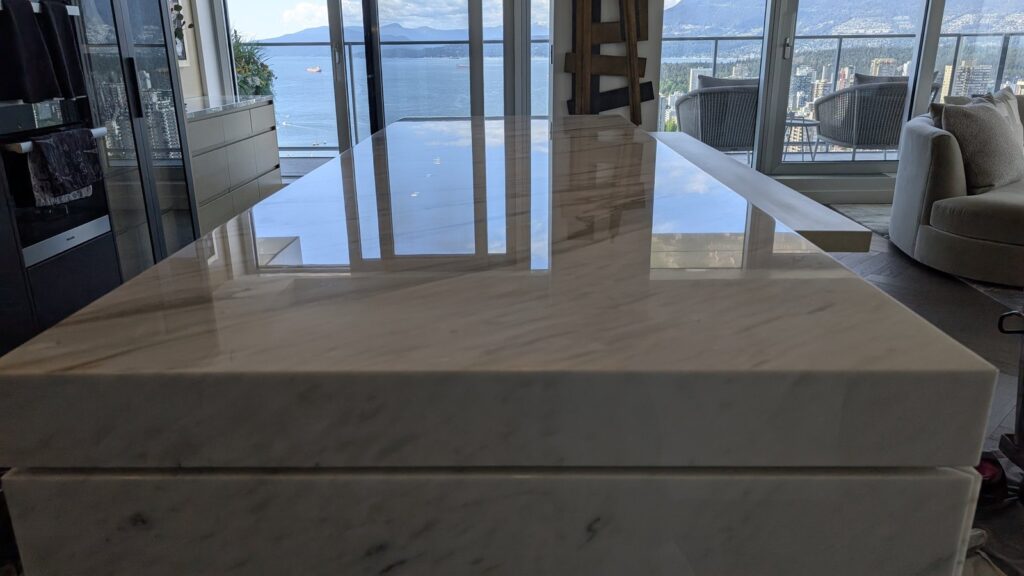
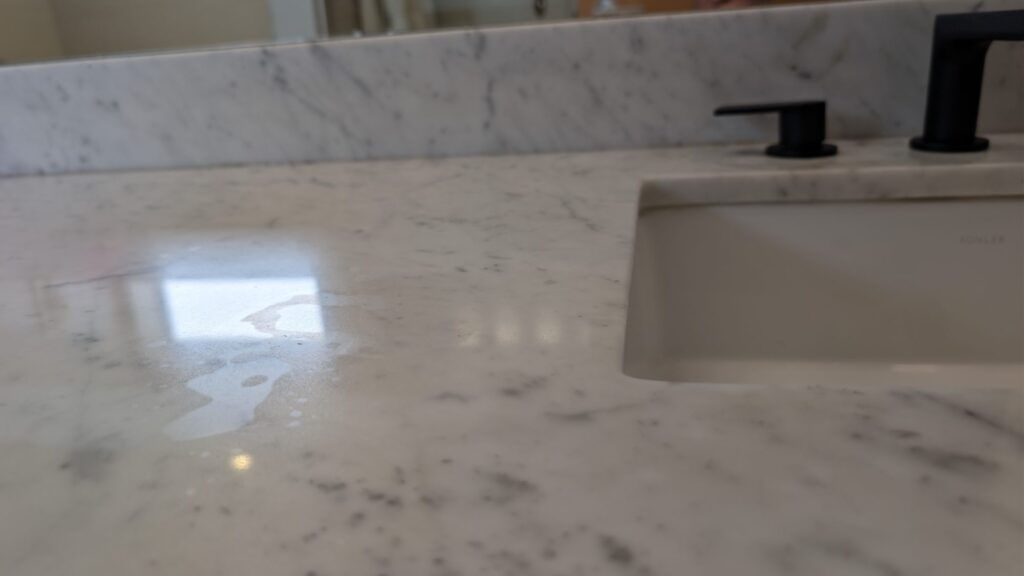
Marble is the bulk of what we do and the floor that shows its age most clearly. Etching from something acidic, scratching from grit, and the slow flattening of a traffic path where everyone walks while the edges near the walls stay bright.
The fix is the same shape every time. Diamond honing takes the surface down past the damage, run wet so nothing goes airborne, then the finish goes back on: a polishing powder worked in with water and buffed, or left honed for a flat matte finish if that suits the room better. Lippage gets ground flat at the same time if tiles have settled unevenly and you can feel the edges underfoot.
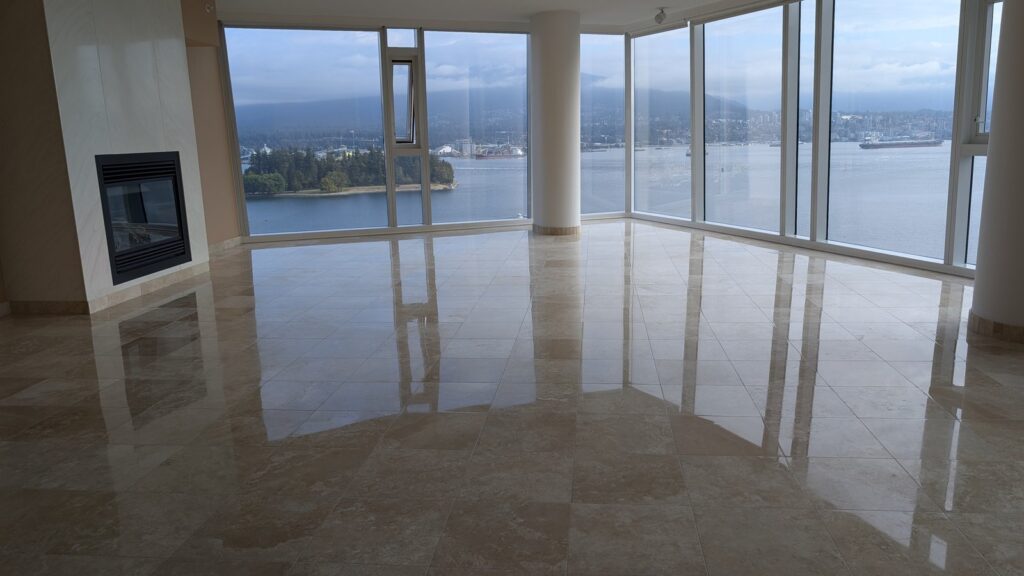
Not every stone floor is marble, and the differences matter more than they look.
Limestone and travertine are softer and more porous than marble. They etch and scratch more easily, they hold grit, and a full gloss can look harsh on them, so a honed finish often suits them better. Travertine has its own quirk: the natural voids in it are filled at the factory, and years later that fill starts popping out.
Granite is harder and holds its polish far longer. In homes it is almost always a counter material rather than a floor. Granite floors are effectively a commercial thing, in lobbies, entrances and elevator surrounds.
Terrazzo turns up in heritage buildings and older lobbies across the city. It was built to be ground and polished, which is exactly what it still wants, and it responds well.
What never works is treating one like another. The honing and polishing steps change with the hardness and the porosity of the stone, and getting that wrong leaves a finish worse than the one you started with.
More on our limestone and travertine pages.
Need help with stone floor restoration?
If something is missing from the stone rather than worn off it, that is a repair and it happens before any polishing.
A chip on a threshold or a stair edge. A crack running through a tile. The pock marks that open up across a travertine floor as the factory fill works loose. Each gets filled with a colour-matched resin, deliberately overfilled, cured, then ground back flat with the surrounding stone.
One thing worth knowing: a fresh repair looks new. If the floor around it has any wear on it, the repaired patch ends up looking better than everything beside it, so the surrounding area usually gets brought back at the same time.
Full detail on our marble chip and crack repair page, which covers limestone and travertine too.
If your floor has no damage to speak of and has simply lost its shine, this is the lighter end of the same process. Most floors still need at least a light diamond hone before a polish will take, because the surface has to be level and open for the polish to work on. Then the shine goes back on.
You choose where it stops. A high polish is brighter and shows the veining. A honed matte finish hides daily traffic better, which on a busy entry is often the smarter call for how the floor will look in two years rather than on the day we leave.
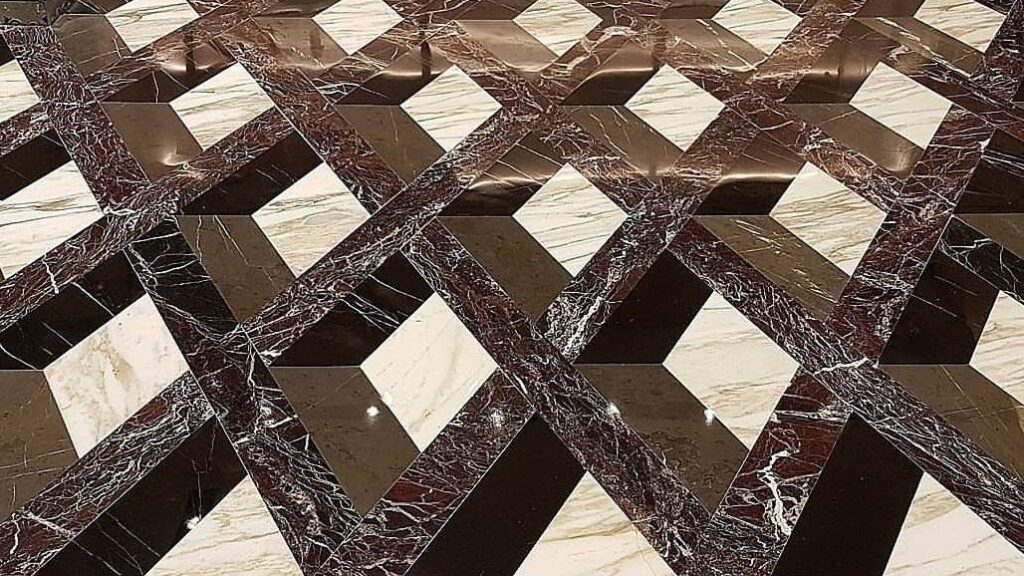
Routine cleaning is what you do between anything more involved, and it is worth doing properly. Use a pH neutral cleaner made for natural stone, never anything acidic, and keep grit off the floor with mats at the doors, because grit is what does the damage.
What cleaning will not do is bring back a finish that has gone. If the floor still looks dull once it is properly clean, that is the surface rather than the dirt, and it needs polishing. On a floor in daily use, that is usually the answer.
Want your floor looked at?
778-862-4998
Yaletown, Coal Harbour and False Creek, where the towers from the boom years have floors now 15 to 30 years old · the West End and its older highrise strata with marble lobbies · Shaughnessy, Kerrisdale, Point Grey, Kitsilano and Dunbar, where character homes still have original marble entries and terrazzo · West Vancouver and the British Properties · North Vancouver, Burnaby, the Tri-Cities, Richmond, Surrey and White Rock · the downtown hotel core, and Whistler for commercial work.
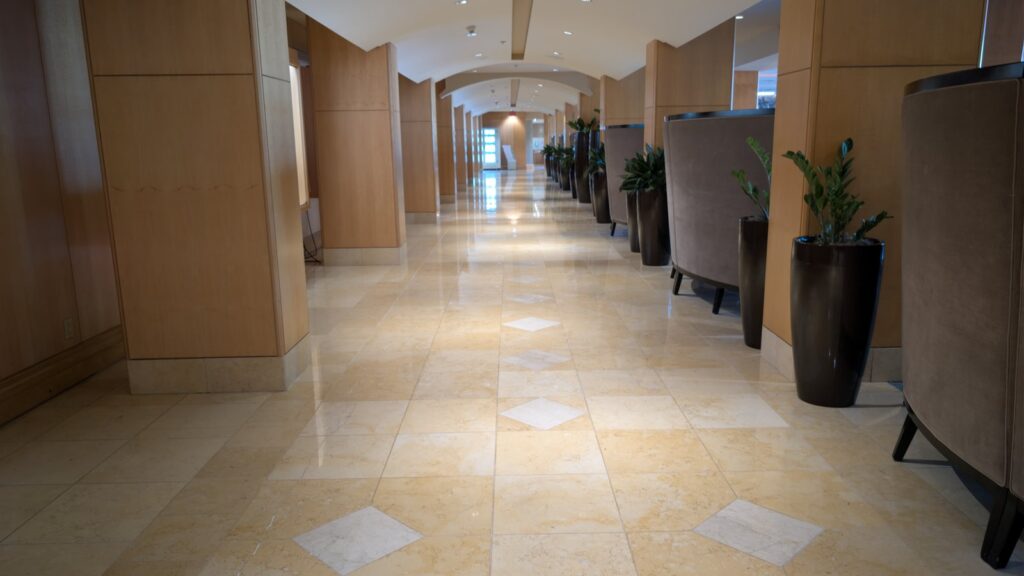
Lobby floors wear differently from home floors. They dull in a path, door to elevator, while the corners keep their shine for years. From October through March, rain brings grit in on every shoe. That changes the answer on polish against hone and how often a floor needs attention, and it is why building work gets scheduled around the building, including overnight.
What moves the price: the size of the floor, how bad the damage is, the type of stone and the finish. The on-site look and the written quote are free, and the quote is emailed to you afterwards. Our pricing page has the breakdown.
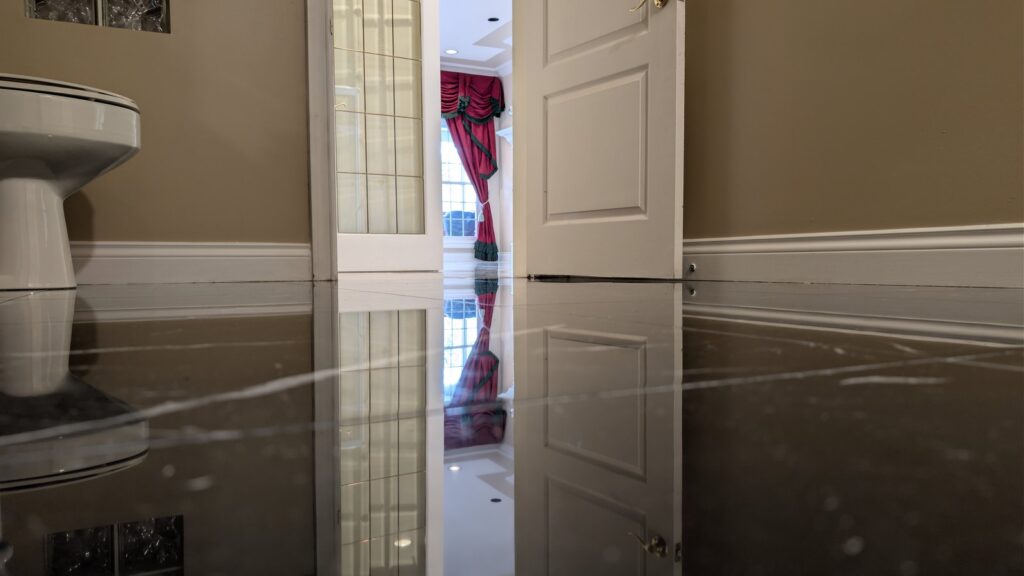
Marble floor polishing and restoration across Greater Vancouver. Dull, worn and etched floors brought back in place, dust free. Free on-site look.
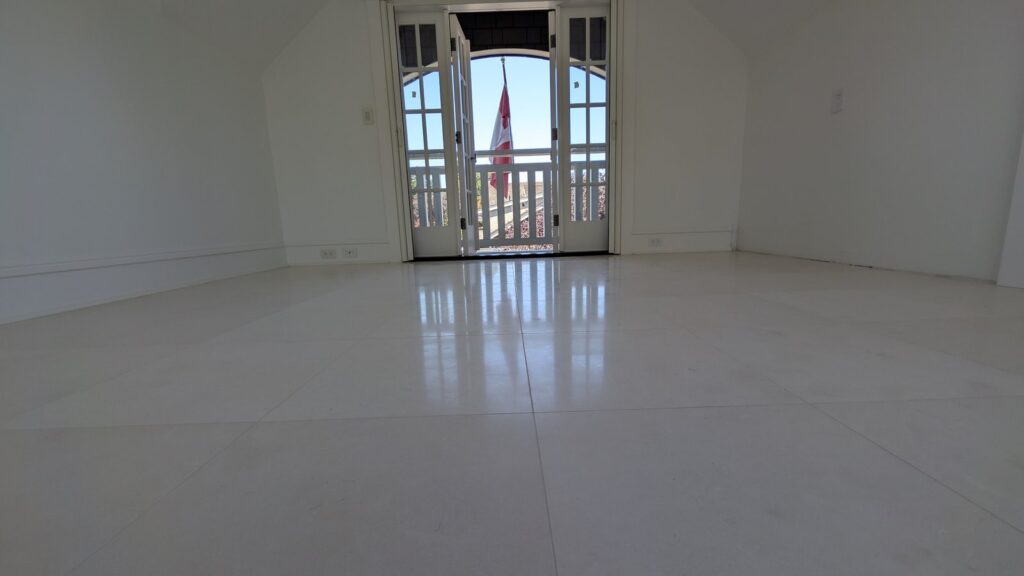
Limestone polishing, honing and restoration across Greater Vancouver. Etching, scratches and traffic wear taken out of the stone you have. Free on-site look.
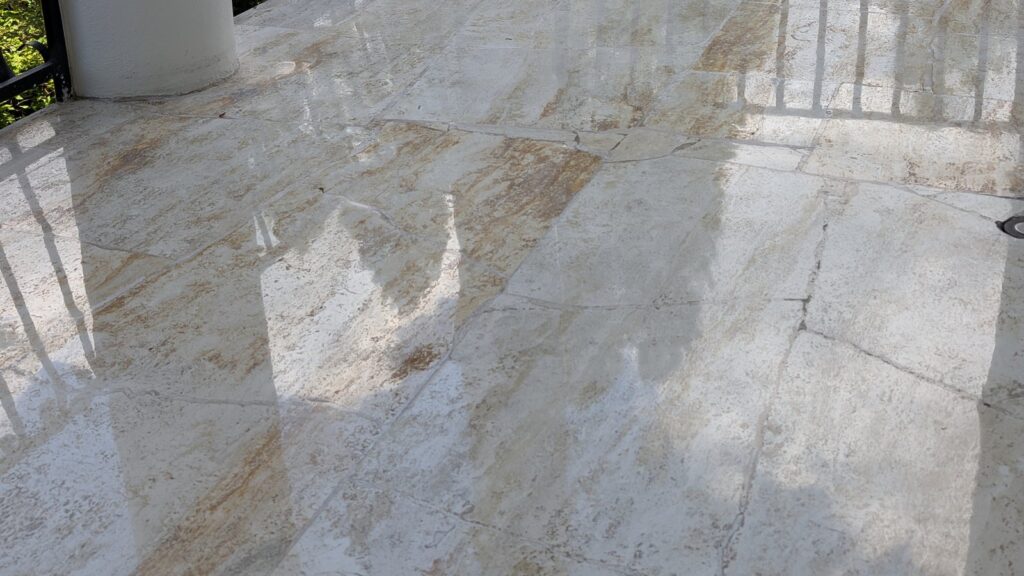
Travertine floors and counters cleaned, polished and repaired across Greater Vancouver, including refilling the holes that open up over time. Free on-site look.
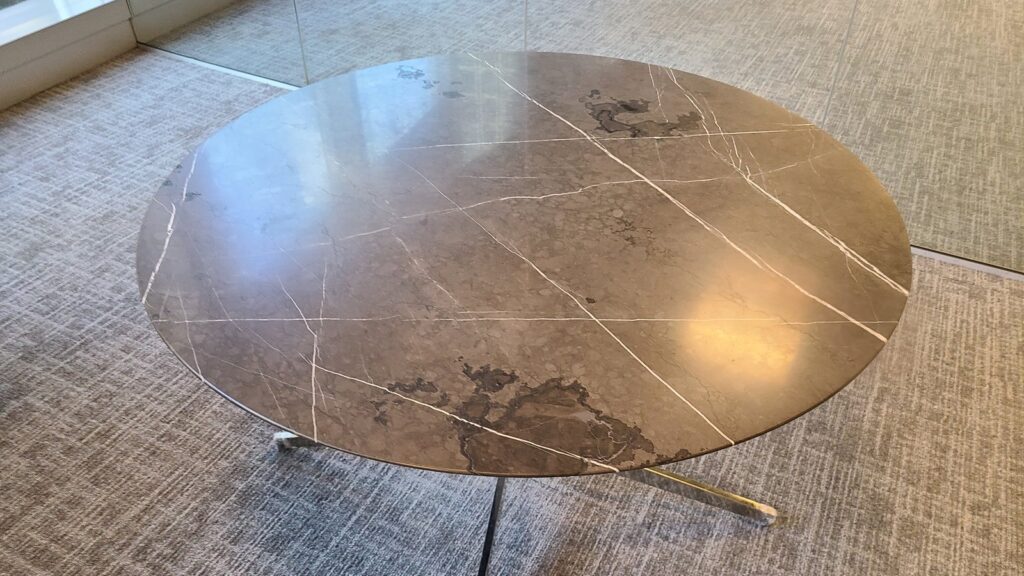
Chips, cracks and holes repaired in marble, limestone and travertine across Greater Vancouver. Filled, cured and ground flat. Free on-site look, quote by email.
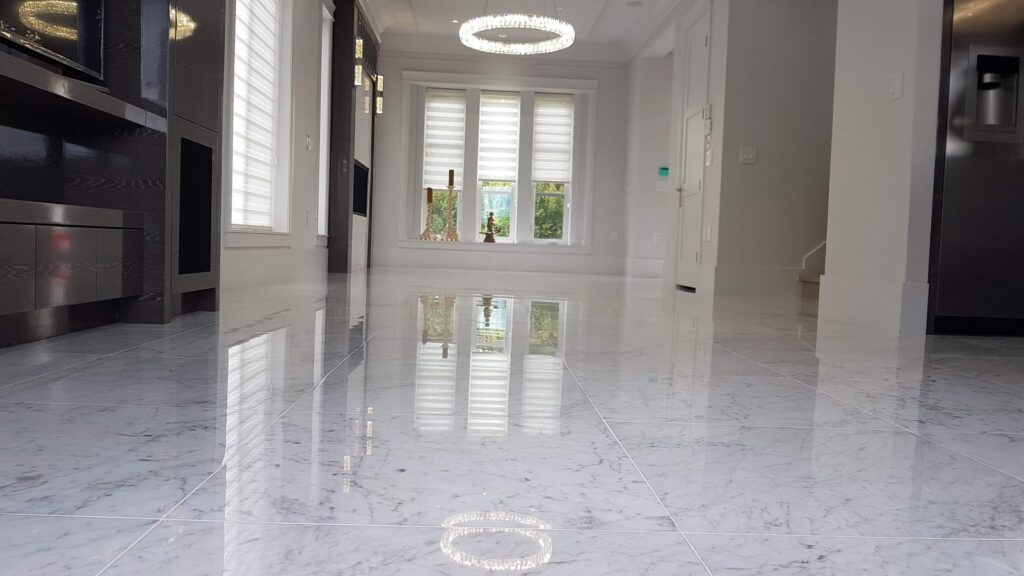
Marble polishing and honing across Greater Vancouver. Dull floors and counters brought back on the stone you already have. Free on-site look, quote by email.
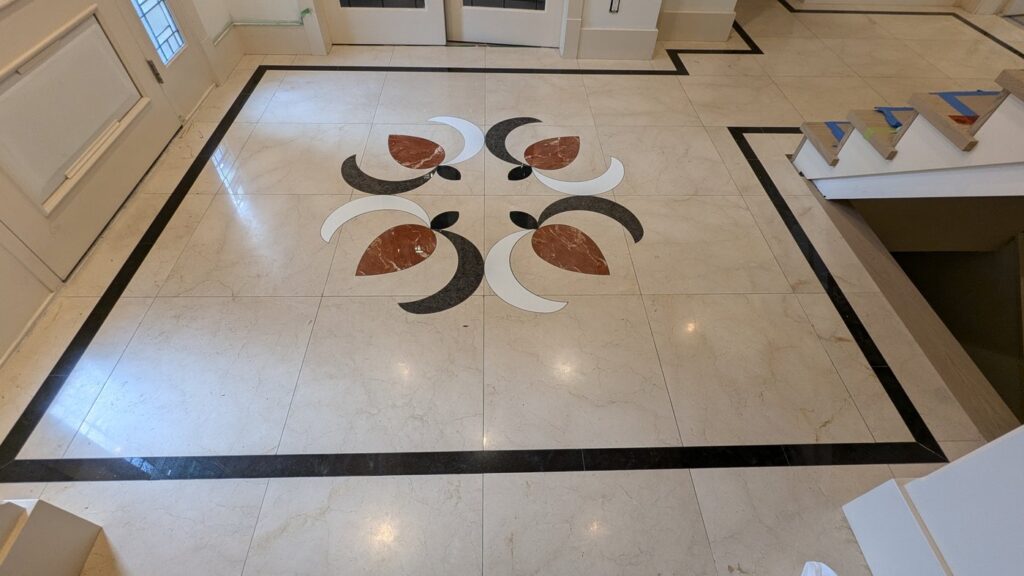
Before
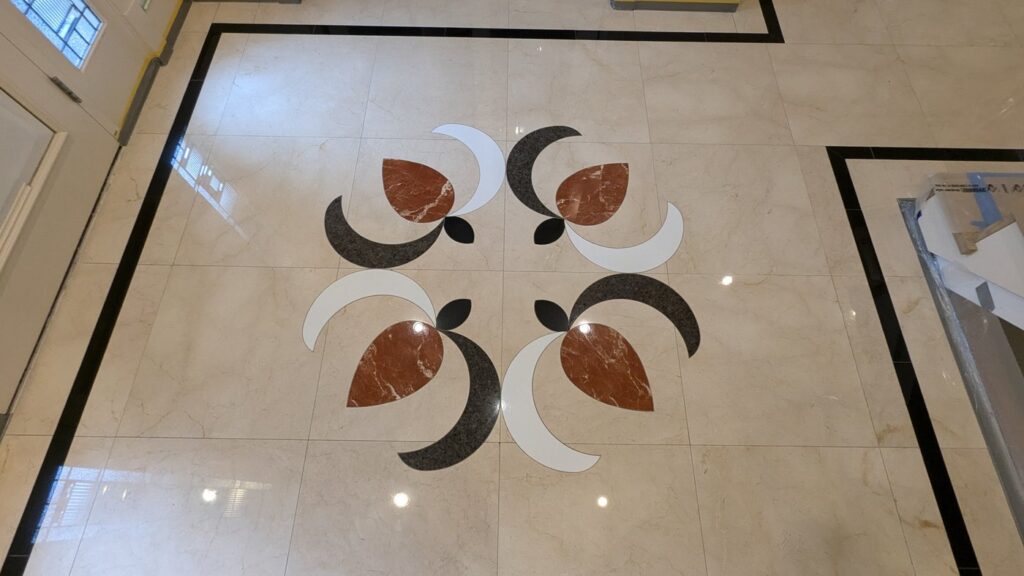
After
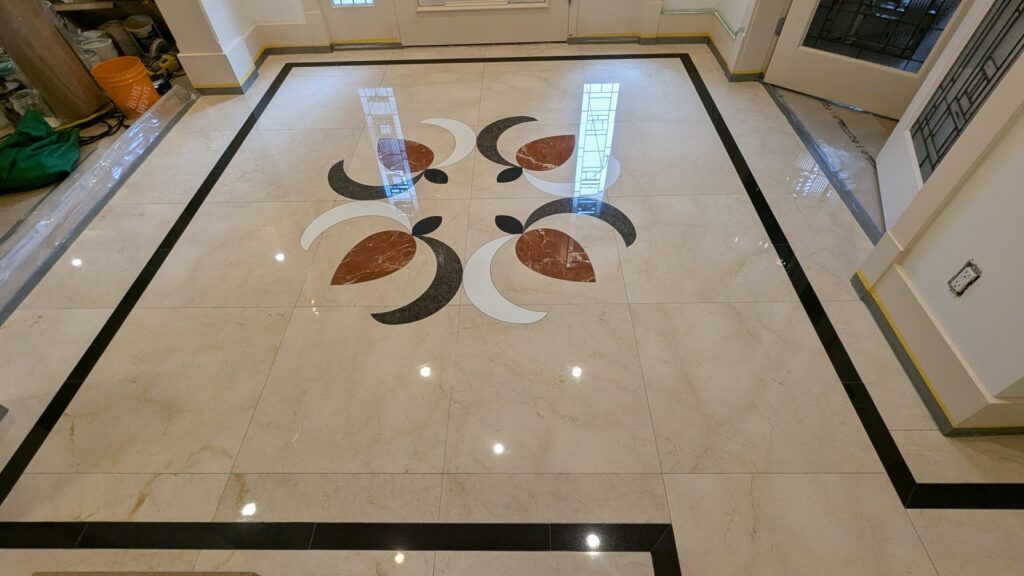
Marble entry with the inlaid medallion, Kitsilano. Before on the first visit, after two days later, from the same spot at the door.
On stone they are two ends of the same process, so the honest answer is that it depends on how much damage there is rather than on which words you use. Most floors need at least a light diamond hone before a polish will take. If there is real damage, chips, cracks, deep etching, that comes first and it is a bigger job. Polishing over damage does not hide it, it makes it more obvious.
Yes, but each stone needs a different approach. Marble, limestone, travertine, granite and terrazzo differ in hardness and porosity, and the honing and polishing steps change accordingly. What works on marble can damage travertine. That is why the floor gets looked at in person before anyone says what it needs, and why we do not quote from photographs.
No, the process is dust free. Water holds the dust down and what is left is captured at the tool, so there is no cloud of stone powder settling on furniture or drifting into vents. On larger jobs, hardwood and carpet are protected for the duration. You will not be sealing off rooms or moving out.
The grit does, rather than the weather itself. From October through March, rain brings sand and street dirt in on shoes, and that grit acts as an abrasive under every step. It is why entryways and lobbies dull far faster than the rest of a floor, and why walk-off mats at the doors are worth more than most stone-care products.
Cleaning lifts what is sitting on top of the stone. Polishing rebuilds the finish of the stone itself. If your floor still looks dull once it is properly clean, cleaning has done its job and the finish is what has gone. At that point no product will bring the shine back, and it needs the surface taking down and rebuilt.
Always, and nothing gets priced over the phone. Photos flatten depth, so an etch that looks like a light haze can be a deep patch, and a crack can run further than it appears. The visit and the written quote are both free, the quote is emailed to you afterwards, and nothing is added to it once work starts without you agreeing first.
Send a photo or call. We will look at it on site and tell you honestly whether it is worth doing.
Free estimate. No obligation.