Based in Maple Ridge · serving Vancouver & the Lower Mainland
Mon to Sat, 8 to 6
Stone care guide
Most people who search this have already tried something, and a fair number have made it worse. That is not a failure on your part.
Written by Rob Murray
Free estimate, on site, with no obligation.
So start here, before you buy anything.
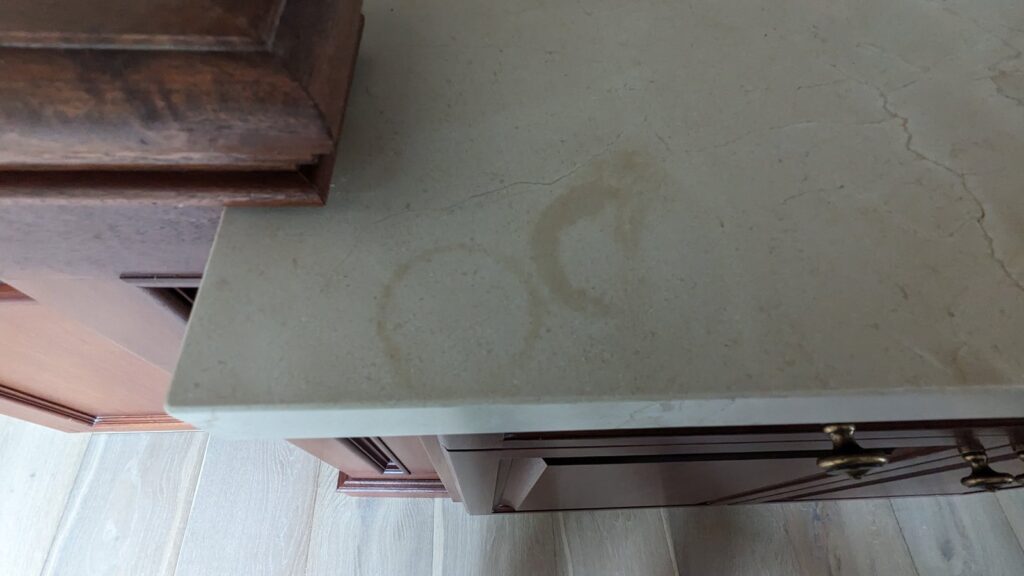
A stain is added colour. Something soaked into the stone and darkened it: cooking oil, red wine, coffee, rust from a planter. The surface is still as glossy as the rest of the counter. The edge usually spreads and feathers where the liquid ran.
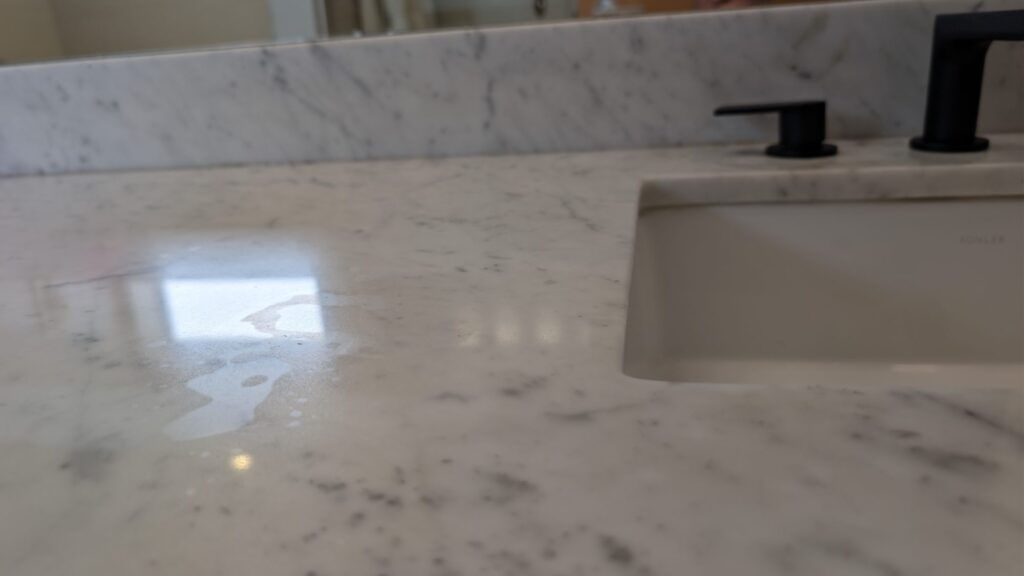
An etch is missing shine. Nothing soaked in. Something acidic took the finish off in that spot, so the mark is the same colour as the stone but flat. It takes the shape of whatever sat there, which is why a wine glass leaves a clean ring.
The reliable way to tell them apart is to look at the shine, not the colour, and to compare the mark with the stone right beside it. If it is darker but still bright, that is a stain. If it is the same colour but dull, that is an etch. On darker marbles an etch usually reads grey.
You may have been told to run a fingernail over it. In practice that only works on severe damage, because most etching is not rough enough to feel. Trust your eyes over your fingertips on this one.
Why it matters: a stain can often be drawn back out of the stone. An etch cannot, because there is nothing there to remove. The finish itself is gone in that spot, and it comes back mechanically or not at all. No cleaner, however expensive, puts polish back.
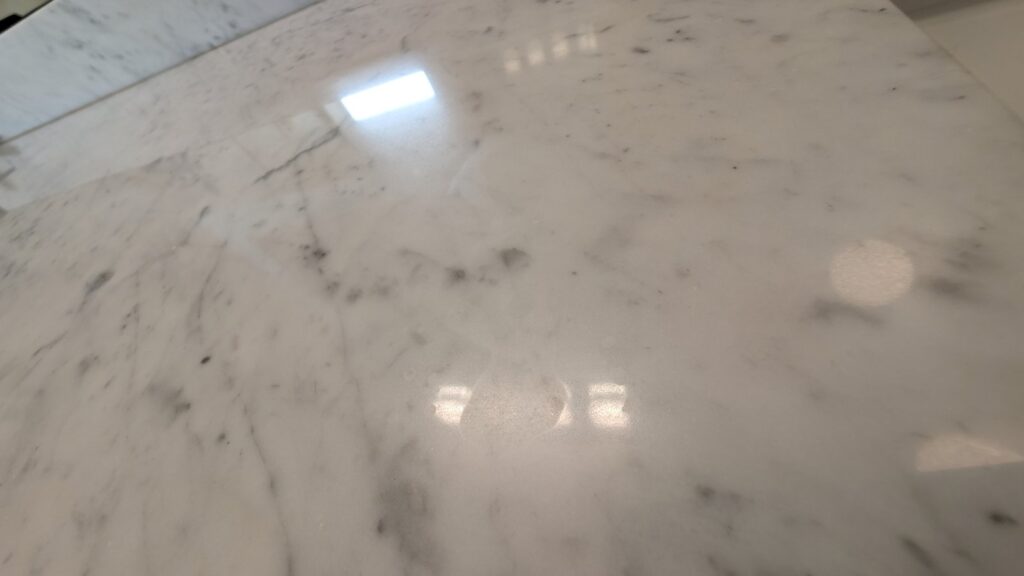
The most common version of this question, and almost always an etch rather than a stain.
A glass sits on a marble counter overnight. In the morning there is a pale ring where it stood. Nothing spilled, nothing obviously acidic, and yet there is a mark.
What happened is that whatever was in the glass, or the condensation running down it, sat against the stone long enough to react. Marble is calcium carbonate, and it does not take much: wine, juice, a soft drink, even prolonged contact with plain water on some stones.
Because it is an etch, cleaning will not shift it. Scrubbing harder spreads the dullness. Reaching for something stronger usually means something more acidic, which makes the ring bigger. This is the single most common way people turn a small mark into a large one.
The fix is to take the surface down past the damage and rebuild the finish. That is not a home job on anything you care about.
Need help with how to get stains out of marble?
If the mark is genuinely a stain, and it is fresh, there are things worth doing.
Routine cleaning with a pH neutral stone cleaner is just normal maintenance, and it is the single best thing you can do for marble between anything more involved.
A poultice is the method for drawing a stain back out of stone. It is a paste, applied over the stained area and left in place, usually 12 to 24 hours depending on the stain, and it works by pulling the staining material up and out of the pores as it dries. It is slow by design, because the stain went in slowly.
It works on staining. It does nothing for etching. It will not touch a dull ring left by a wet glass, and it will not bring back a hazy patch where someone wiped up spilled wine.
What decides whether it works is matching the approach to what the stain actually is: oil, wine, coffee, rust and ink all behave differently. That is the part that most often goes wrong at home, and it is why a general-purpose attempt frequently does nothing.
The honest limit of it: a poultice pulls out what is inside the stone. It does nothing for what has been removed from the surface.
For any of those, our stain removal page covers how the professional version works, and our etch removal page covers the dull-mark side of it.
The shine on polished marble is not a coating. It is the surface of the stone itself, worked smooth enough to reflect light. That is why nothing in a bottle restores it, and it is also why touching up one small area unevenly creates a bigger contrast than the original mark ever had.
We have walked into kitchens where somebody spent a weekend on a mark that was never dirt to begin with. It is worth ten seconds of looking before you spend the weekend.
About the author
Look at the shine rather than the colour, and compare the mark with the stone right beside it. A stain is darker but still glossy, with an edge that spreads and feathers. An etch is the same colour as the stone but flat and dull, and it takes the shape of whatever sat there. On darker marble an etch usually looks grey. Ignore advice about feeling for roughness, because most etching is not rough enough to feel.
No, and this is the most useful thing on this page. An etch is not something sitting on the surface, it is the surface, with the finish taken off it. There is nothing to dissolve or lift. Scrubbing spreads the dullness and stronger products usually mean more acidic ones, which makes the mark bigger. Fixing an etch means taking the surface down past the damage and rebuilding the finish.
Because it does not take a spill. Whatever was in the glass, or condensation running down the outside of it, sat against the stone long enough to react with it. Marble is calcium carbonate and it responds to very mild acids, so wine, juice or a soft drink will do it overnight. The result is an etch rather than a stain, which is why cleaning it never works.
Treating an etch like a stain and scrubbing it with something acidic or abrasive. Vinegar, lemon-based cleaners and do-it-yourself polish kits routinely make a small mark into a bigger, patchier one, because they either etch a wider area or scratch the finish around it. If you take one thing from this page: identify the mark before you touch it.
Not the way people expect. What matters far more is what gets used on the stone. Soap and product residue builds up slowly on counters and shower surrounds, and general-purpose cleaners that are fine on tile are often acidic enough to dull marble over time. Routine care with a pH neutral stone cleaner does more for your marble here than anything to do with the weather.
No, and they are not interchangeable. A poultice draws a substance like oil or wine back out of the stone from below the surface. Etch repair is mechanical: the surface is taken down past the damage and the finish is rebuilt on top. Trying a poultice on an etch is one of the most common wasted weekends we hear about, and it is precisely why identifying the mark first is worth the ten seconds.
Send a photo or call. We will look at it on site and tell you honestly whether it is worth doing.
Free estimate. No obligation.