Based in Maple Ridge · serving Vancouver & the Lower Mainland
Mon to Sat, 8 to 6
Etch and scratch repair
Etch marks and scratches are the two most common things we are called out for, and they are the same job underneath: the damage is in the surface of the stone, so it comes out mechanically rather than with any product.
Free estimate, on site, with no obligation.
This is the question we get more than any other, and it is worth two minutes because the two need completely different work.
An etch is missing shine. Marble is calcium carbonate, so anything acidic reacts with it: wine, a lemon wedge, vinegar, some bathroom cleaners. The acid eats the polished layer right where it landed. The stone underneath has not changed colour, it has lost its finish. The tell is that the spot reads dull against the stone around it. On darker marbles an etch usually looks grey.
A stain is added colour. Oil, coffee or a grease spill soaks into the pores and darkens the stone from within. You will normally see a soft, spreading edge where the liquid ran, and the surface is still as glossy as the rest of the counter.
We get calls every week from people certain their marble vanity is ruined. Most of the time it is an etch, and an etch is a much smaller job than they are expecting. A dull ring near a kitchen sink or a hazy patch on a bathroom counter is the classic pattern.
A stain is a different process, drawn out of the stone rather than ground off it. That is on our stain removal page.
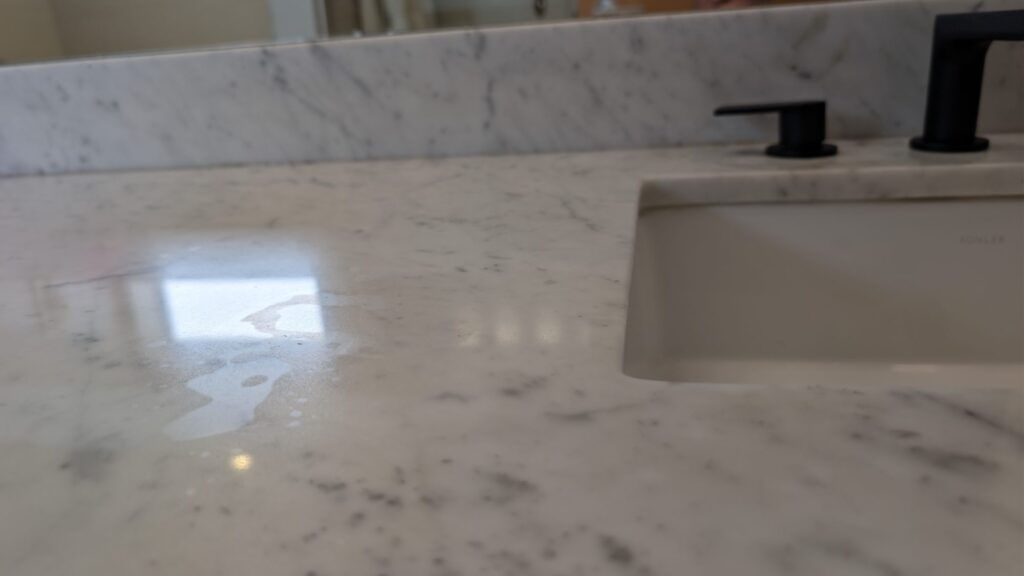
A light etch shows up as a faint ring or a slightly duller patch where something acidic sat too long. The morning after a dinner party, a lemon wedge left overnight, a wine glass wiped up an hour late. Shallow damage gets a shallow fix.
Deep pitting is a different animal. Acid that sits for days instead of minutes, or lands in the same place over and over: a coffee maker that drips every morning, a bar top where citrus gets squeezed nightly. The surface does not just lose its shine, it develops small craters. Getting past that means taking off more material, and that changes how much honing the stone needs before it can be polished again.
One thing worth knowing before you call. When we fix an etch, that piece of stone comes back looking new. If the surface around it is not refinished at the same time, the repaired spot now stands out against everything else. So in most cases the whole area gets refinished so it reads as one surface. On a newer install it is easier to work a single mark in. Most people wait until the whole surface is marked up before they call, and by then the answer is the full area anyway.
We look at three things before saying what your stone needs: how deep the damage runs, how much area it covers, and what finish it had to begin with. A honed vanity and a polished floor are not handled the same way even when the mark looks identical.
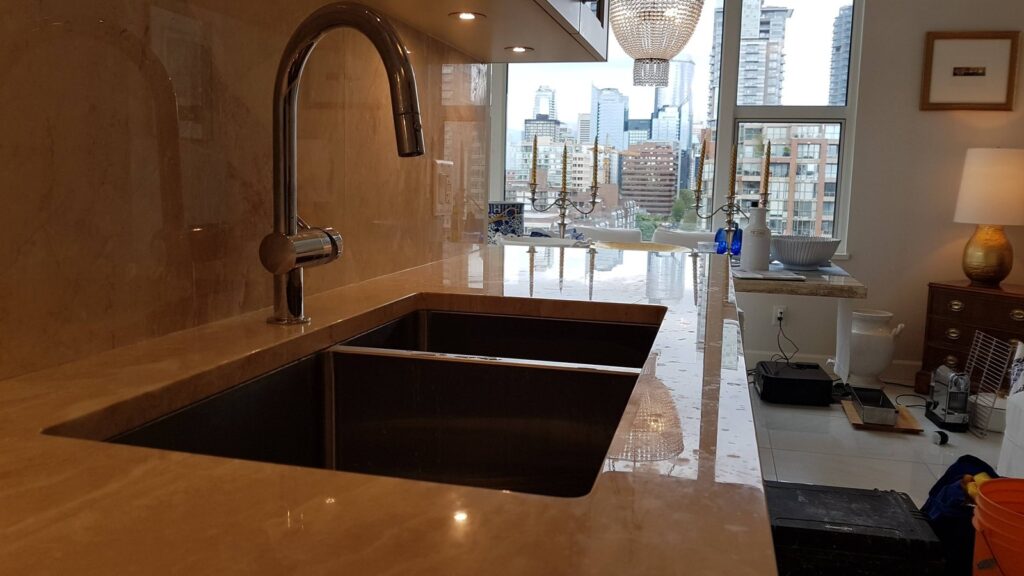
Need help with etch and scratch repair?
A scratch is physical rather than chemical, but the fix is the same sequence. Grit tracked in underfoot, a dragged chair leg, sand off a beach bag left on a vanity. You will see thin lines running in one direction that catch the light at an angle.
Diamond honing takes the surface down past the scratch, then the finish comes back on top. Same as an etch, and the same rule applies about refinishing the area around it so nothing stands out.
Chips, cracks and holes are a different job. Those get filled with a colour-matched resin, cured and ground flat, which is a separate process. That is on our marble chip and crack repair page.
The order matters, and it is the part most people have not seen before.
On timing, honestly: a single vanity is often a few hours. A large kitchen can be two days plus a return visit to seal. Floors run anywhere from a day to a week depending on size and damage, with wood and carpet protected the whole time. It is job by job, and you will get the real number before anything starts.
Dust is usually the worry, and it should not be. The work is dust free: water holds it down and what is left is captured at the tool.
For a hotel lobby or a strata building the visit runs the same way, at a bigger scale and usually scheduled around the building.
Need help with an etch or a scratch?
778-862-4998
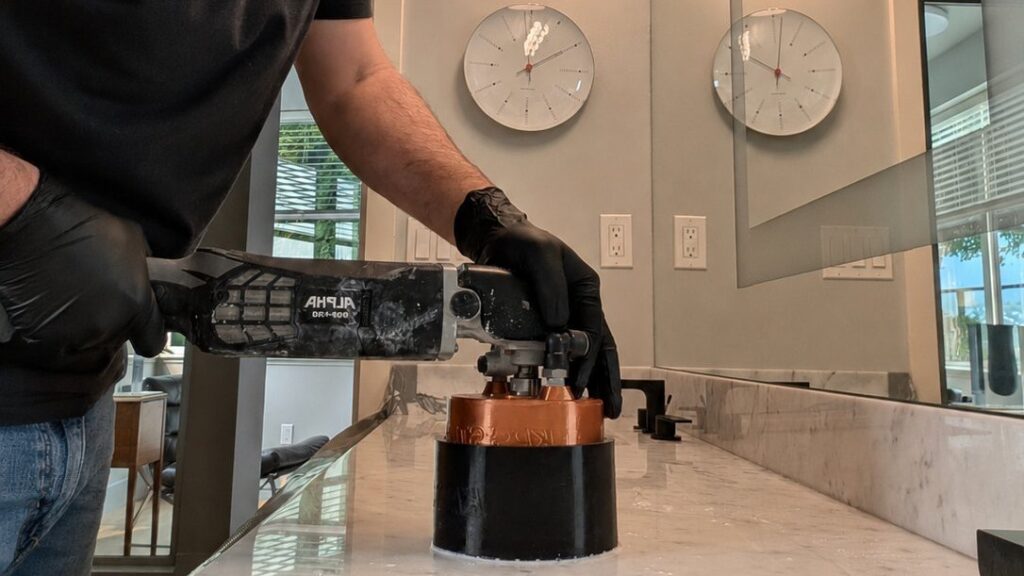
We do not quote marble etch repair over the phone, and you should be wary of anyone who does. Photos flatten depth, so a light haze in a picture can turn out to be a deep patch.
So we come and look, at no charge and with no obligation, and the written quote is emailed to you afterwards. Nothing is added later without being quoted first.
What moves the number: the size of the surface, how bad the damage is, the type of stone and the finish you want. The full breakdown, including the minimum service call, is on our pricing page.
Etching is acid meeting calcium, and nothing else. Damp air does not cause it, and neither does Vancouver’s water. Once you know what sets it off, it is mostly avoidable.
Sealing does not prevent etching. It helps the stone resist staining, and that is a different problem. No sealer stops acid reaching the surface, on any stone.
We work across Greater Vancouver and the Lower Mainland: Yaletown, Coal Harbour and False Creek, the West End, Shaughnessy, Kerrisdale and Point Grey, Kitsilano, Dunbar, West Vancouver and the British Properties, North Vancouver, Burnaby, the Tri-Cities, Richmond, Surrey and White Rock, and Whistler for commercial work.
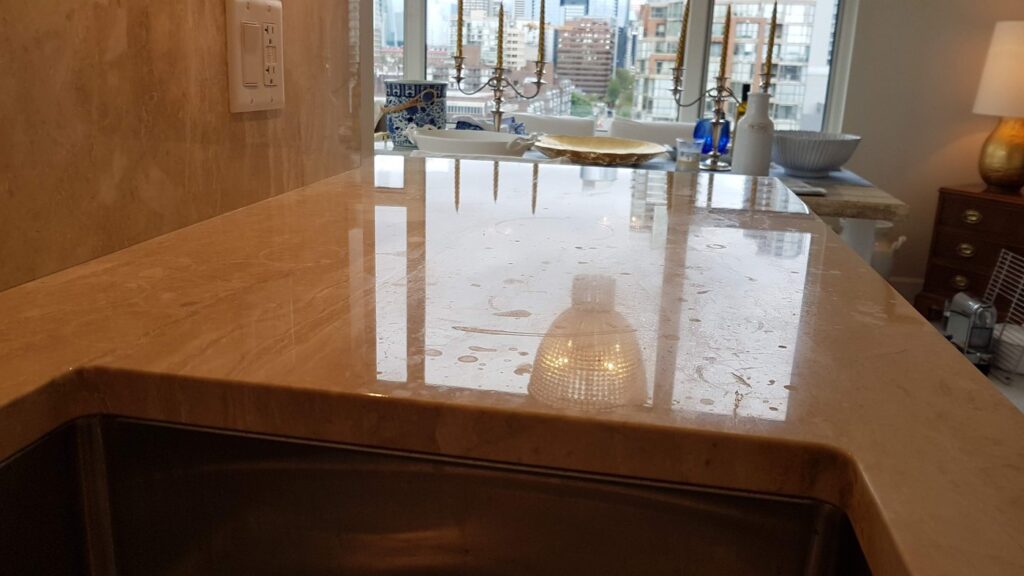
Before
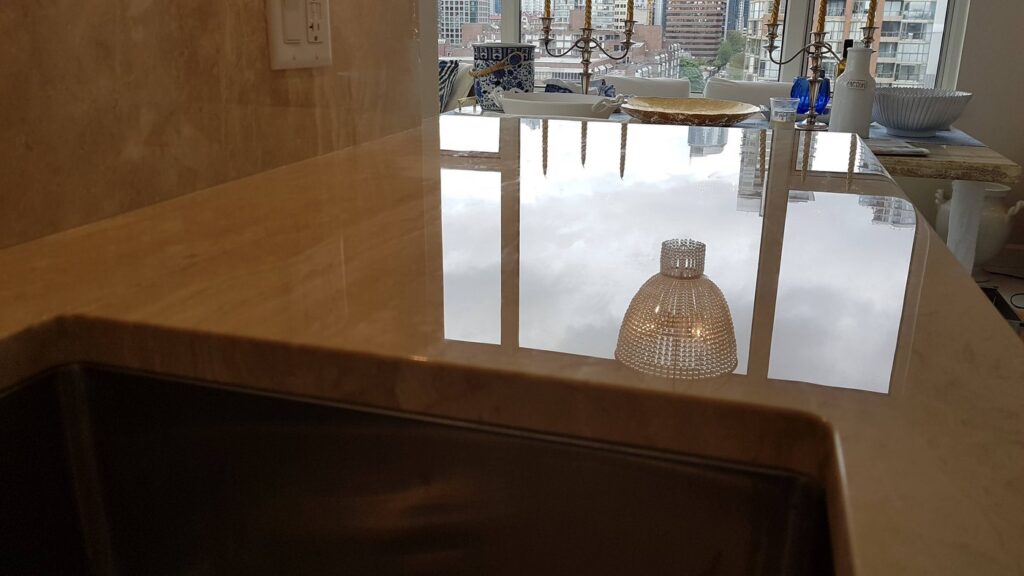
After
Marble kitchen counter, Yaletown. The dull spots are etching. Honed and polished the same morning.
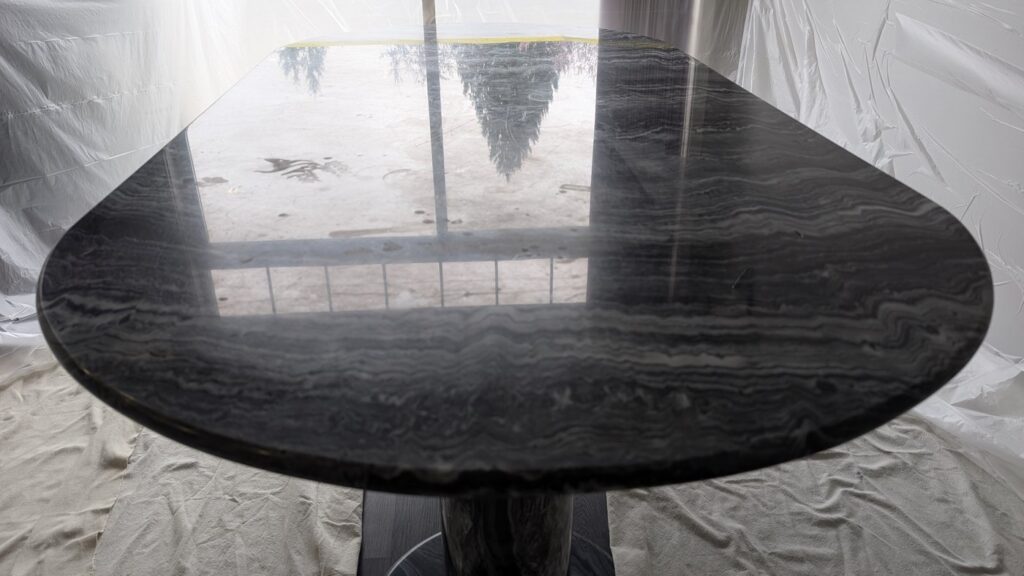
Before
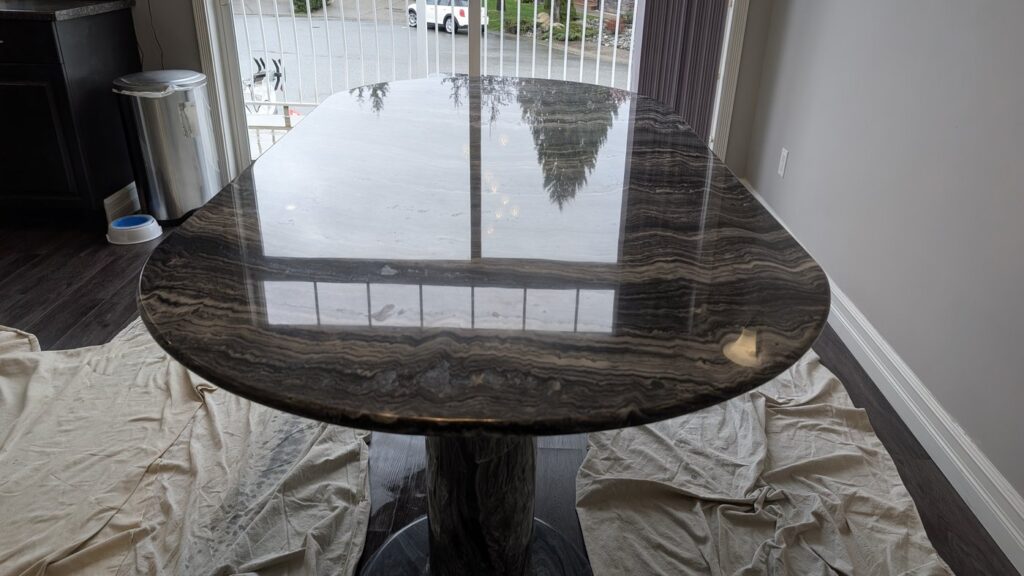
After
Dark marble table. On dark stone an etch reads grey, which is exactly what the pale patches are. Same table, same day.
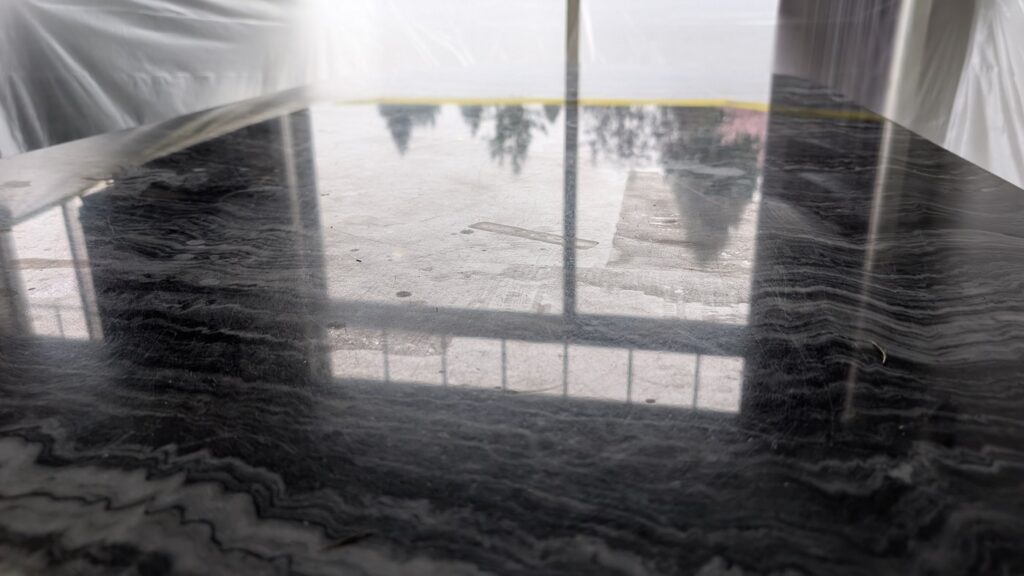
Before
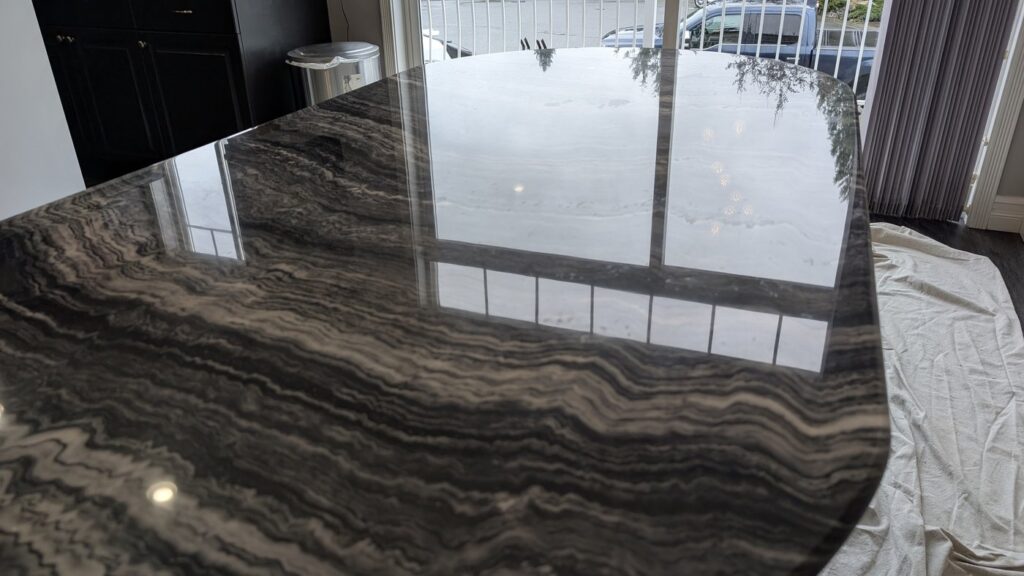
After
The same table, closer. The etching sits in the surface and cannot be felt, only seen.
Compare it to the stone right beside it. An etch reads dull against a surface that is still bright, and it stays the same colour as the stone around it. On darker marble it usually looks grey. A stain is the opposite: the colour changes but the shine does not, and the edge tends to spread and feather. Wetting the spot helps too, because an etch stays dull when wet while a stain often darkens.
A light etch, like a faint ring from a lemon wedge, is correctable, but it needs the right honing and polishing sequence. Getting the grit sequence wrong leaves a patch that looks worse than the mark did. There is also the part people do not expect: fixing one spot properly usually means refinishing the area around it, or the repaired patch ends up looking newer than everything else. If a damp cloth and a pH neutral cleaner do not shift it, it is worth having someone look.
We look at the stone in person first, because a photo cannot show how deep an etch sits. Then the damaged layer comes off with a diamond hone, and the finish goes back on afterwards: a polishing powder worked in with water and buffed, or buffed to a matte hone if that suits the room better. The work is dust free throughout. Before we leave, we go through what caused the etch so it does not come straight back.
Yes. We cover Greater Vancouver and the Lower Mainland, including North and West Vancouver, Burnaby, the Tri-Cities, Richmond, Surrey and White Rock, plus Whistler for commercial work. Mention where you are when you get in touch and we will sort the scheduling around it.
Because that is where the acid is. Citrus, wine, vinegar, cosmetics and cleaning sprays all land around sinks and vanities, and marble reacts to every one of them. It is not about how well you clean. Wiping spills up quickly and switching to a pH neutral stone cleaner cuts down how often it happens, and a sealer will not help with this one because sealing does nothing for etching.
Usually that is wear rather than a single spill, and cleaning will not fix it. Once a surface has gone flat across the board, the finish itself has worn down and it needs a polish to come back. That is a bigger job than a single mark, but it is the same idea: take the surface down evenly, then bring the finish back so the whole thing reads as one surface again.
Send a photo or call. We will look at it on site and tell you honestly whether it is worth doing.
Free estimate. No obligation.