Based in Maple Ridge · serving Vancouver & the Lower Mainland
Mon to Sat, 8 to 6
Sealing
Sealing is the most misunderstood job in stone care, so here is the short version before anything else. A penetrating sealer soaks into the stone and slows liquids down on their way in. It buys you time to wipe a spill up.
Free estimate, on site, with no obligation.
This is where most of the confusion starts. A penetrating sealer is absorbed into the stone. It does not sit on top, it does not form a film, and it does not change how your marble looks. Nothing about the appearance of your counter tells you whether it is sealed.
So if your marble has gone dull, that is not the sealer. That is the finish, and it is a polishing question rather than a sealing one.
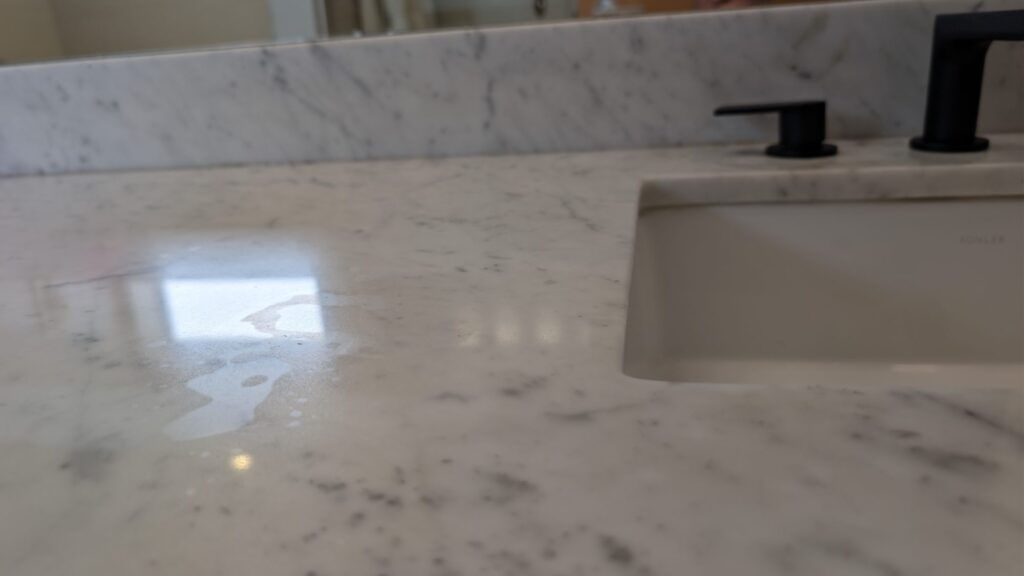
What you can check is whether the stone still resists. Put a few drops of water on it and leave them for a while. If the water sits there and the stone underneath stays the same colour, the seal is doing its job. If the water soaks in and the stone darkens where it sat, then lightens again as it dries, the stone is drinking and it is worth resealing.
The other thing worth knowing: it is genuinely impossible to tell whether an older stone was ever sealed. Plenty of the character-home entries and vanities we work on never were. What is true is that unsealed stone absorbs noticeably more.
Most penetrating sealers are designed to last three to five years, with exceptions in either direction depending on the product and the stone.
That is a longer window than most people assume, and here is the part that usually surprises them: a sealer does not get worn off by foot traffic. It is absorbed into the stone rather than laid on top of it, so there is no coating for shoes to scuff away. It fades as the product itself breaks down over time, not because people walked on it.
Which means resealing on a tight schedule is usually money spent for nothing. Check whether the stone still beads water. If it does, leave it alone.
Need help with marble sealing?
Sealing does exactly one job: it slows how fast liquid soaks into the stone. Everything below is a different problem with a different fix.
Order matters more than the product. If your marble has etching, scratching or chips, that gets sorted first and the sealer goes on afterwards to protect the restored surface.
If you are not sure whether you are looking at an etch or a stain, our etch removal page goes through how to tell.
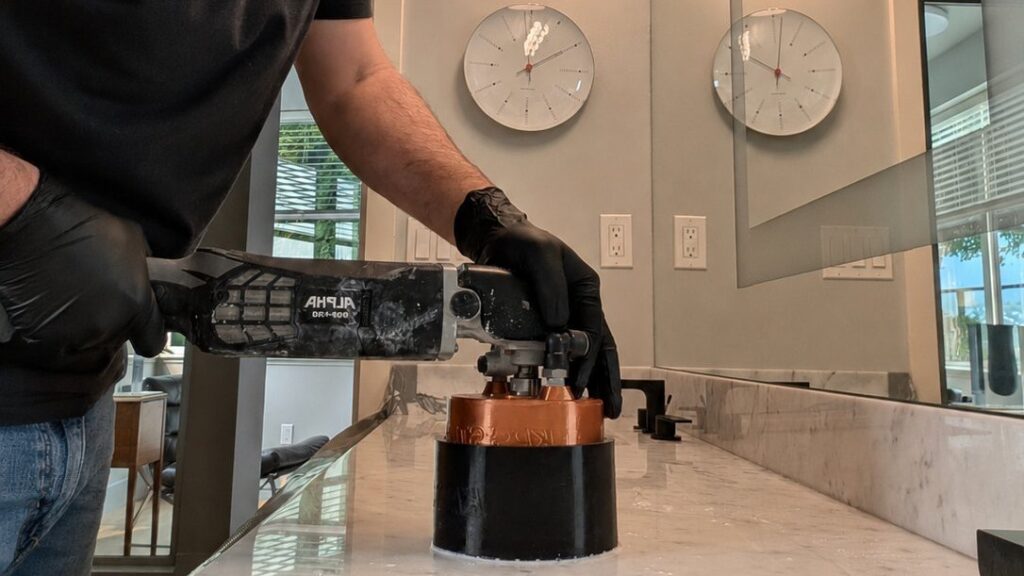
We look at the stone in person first, because the answer depends on the stone, the finish and how the room gets used.
We do not test it before leaving, and nobody honestly can. A freshly sealed surface has not cured yet, so a water test on the day tells you nothing. Testing properly would mean coming back a second day, which is a visit you would be paying for to confirm something that is working.
If your marble needs honing or polishing first, that happens before the sealer, never after.
On timing, sealing on its own is usually quick. Where it takes longer is when it follows restoration work, and then the timeline is whatever that work needs: a few hours for a vanity, up to two days plus a return visit for a large kitchen, longer again for a floor.
Thinking about sealing? Let’s talk.
778-862-4998
Older character homes across Shaughnessy, Kerrisdale, Point Grey, Kitsilano and Dunbar often have marble entries, hearths and vanities that came with the house. Many were installed before sealing was standard and have never had any. You cannot tell by looking, but unsealed stone drinks more, and years of foot traffic and damp tracked in on shoes leave their mark. Sealing slows what happens next; it does not undo what already happened.
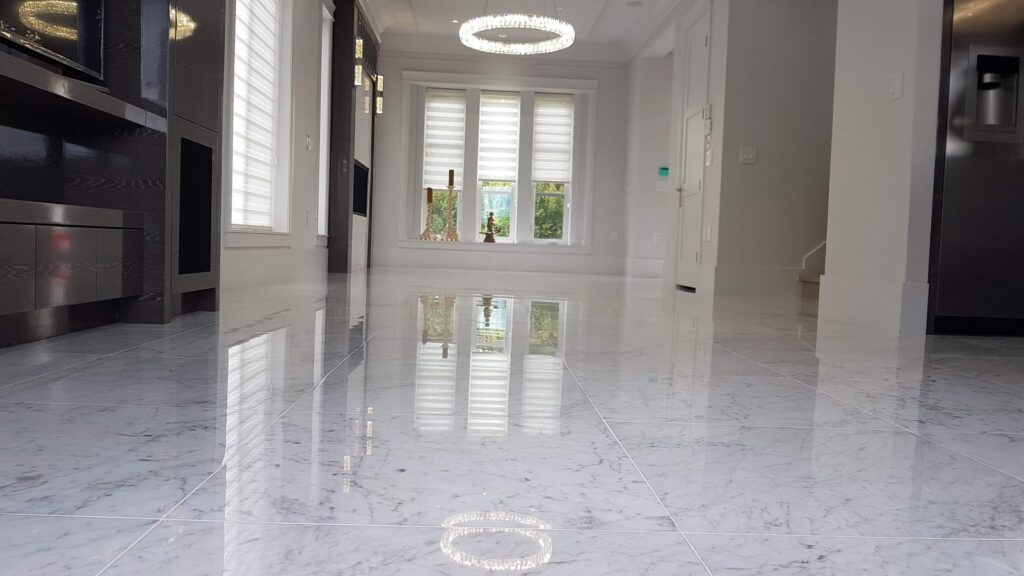
Lobbies and strata common areas downtown, in the West End and across the Lower Mainland have the opposite problem, which is volume rather than age. Hundreds of people a day, wet umbrellas through the winter, coffee near the front desk. More things touch the floor, so more things get the chance to soak in.
What it costs comes down to the size of the surface, the condition of the stone, the type of stone and the finish. The on-site look and the written quote are free, the quote is emailed to you afterwards, and there is no call-out fee. Our pricing page has the detail.
Most penetrating sealers are designed to last three to five years, with exceptions depending on the product and the stone. Rather than working to a calendar, check it: leave a few drops of water on the surface for a while. If the water sits and the stone stays the same colour, the seal is fine. If it soaks in and darkens the stone, it is worth resealing. A sealer is not worn off by foot traffic, because it is absorbed into the stone rather than sitting on top of it.
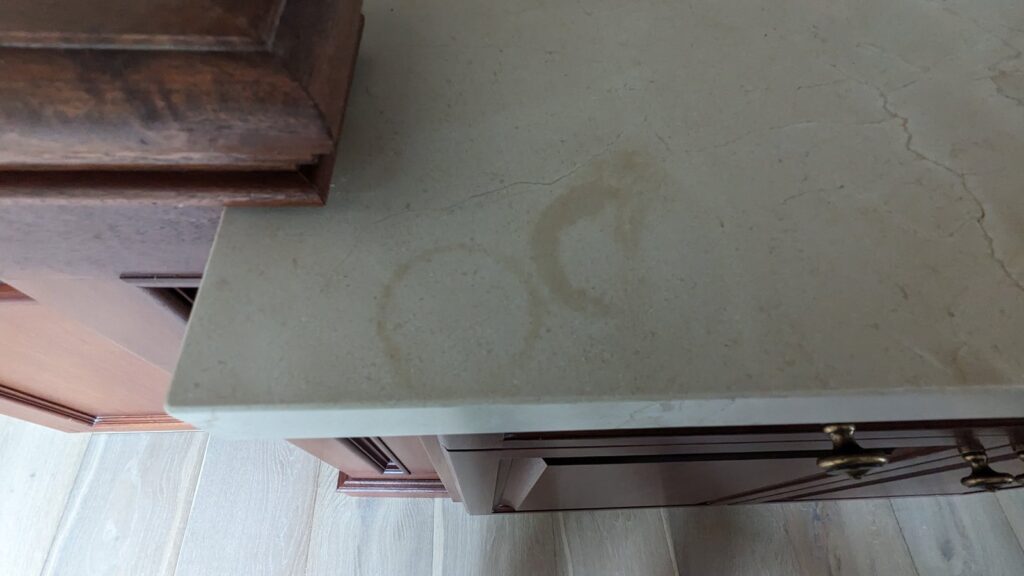
No, and this is the question we get asked most. Sealing helps the stone resist staining, which is a completely different problem. Etching is acid reacting with the calcium in the stone itself, so wine, lemon juice or the wrong cleaner will still dull the surface on a sealed counter. No sealer prevents that, on any stone. If you already have etch marks, they need polishing out, and sealing over them just protects the damage.
No. A sealer slows liquid down on its way into the stone, which gives you time to wipe a spill up before it soaks in. That is a meaningful difference in a working kitchen, but it is not a barrier. Oil, wine and coffee left sitting long enough will still find their way in. Treat it as extra time rather than protection.
Honestly, you often cannot, and on older stone it is impossible to know whether it was ever done. A penetrating sealer is invisible, so there is nothing to look for. The only useful check is absorbency: does a drop of water sit on the surface, or does it soak in and darken the stone? That tells you what you need to know regardless of what was or was not applied years ago.
No. Sealing adds nothing to the appearance of the stone, so a dull surface stays dull. Dullness means the finish itself has worn down or been etched away, and the fix for that is polishing: the damage comes off with a diamond hone, then the shine goes back on. Sealing comes after that work, to protect the restored surface, not instead of it.
You can, and for a small vanity in good condition it is a reasonable job to take on with a proper stone sealer and a careful read of the instructions. The two things that go wrong are not letting the stone dry first, so the sealer cannot get in, and leaving excess on the surface, which dries to a haze that then has to be removed. Where it is worth calling someone is when the stone needs work before sealing, because sealing a damaged surface locks the damage in.
Send a photo or call. We will look at it on site and tell you honestly whether it is worth doing.
Free estimate. No obligation.