Based in Maple Ridge · serving Vancouver & the Lower Mainland
Mon to Sat, 8 to 6
Granite polishing
Granite is the most durable stone in most kitchens, and it needs less than people expect. Cleaning, polishing and sealing covers nearly all of it.
Free estimate, on site, with no obligation.
A lot of stone-care advice online is written about marble and quietly applied to granite. They are not the same material and it matters.
Granite rarely goes dull. It holds its polish far longer than marble does, and it resists acid well enough that wine or lemon juice will not etch it the way they etch a marble counter. If your granite has flattened off, that is usually fine scratching from an abrasive pad or steel wool rather than anything chemical.
Granite rarely stains, though there are exceptions and some stones are more absorbent than others. Oil is the one that gets in when it does happen.
And there is no coating on it to lose. A sealer for granite soaks into the stone rather than sitting on top of it, so there is no film to wear through. If someone tells you your granite has lost its protective layer, ask them what layer they mean.
What this adds up to: most granite counters need a clean, a polish and a seal. That is the honest scope of the job, and it is a smaller job than the internet will tell you.
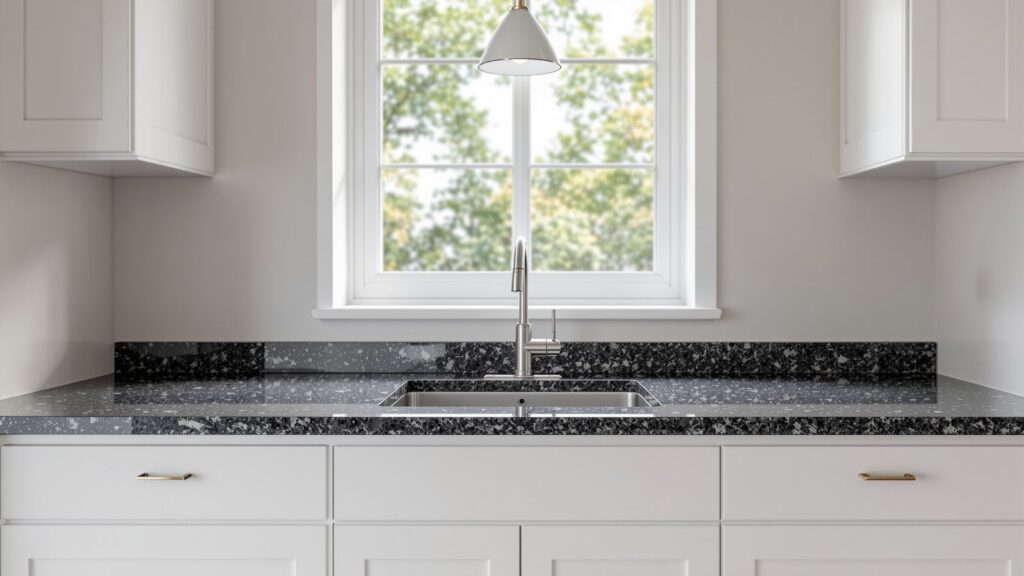
Polishing brings back gloss on a surface that has flattened off. On granite that is usually a matter of fine scratching accumulated over years of cutting boards, cleaning products and things being slid across the counter.
One thing we would rather say up front. Granite does not always come back to its original factory finish. That finish is put on with industrial equipment before the slab ever reaches your kitchen. Some granites polish back beautifully by hand. Others are difficult, and the result is a real improvement rather than a reset to new. Which one yours is depends on the stone, and we will tell you honestly when we look at it rather than promising something the material may not give.
Where honing comes into it. Deeper damage has to be taken down with diamond abrasives before any polish will help, and that is a bigger job. On granite it is rarely needed, which is exactly why we avoid calling this work “restoration”: it implies the heavy end of the process on a stone that usually does not require it.
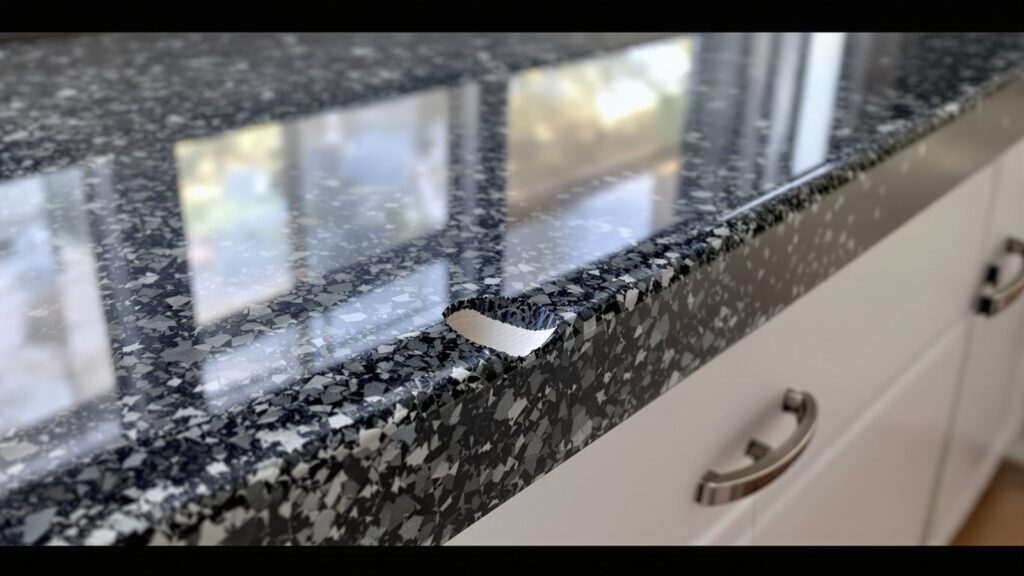
Chips and cracks are separate and come first, because polishing over damage makes it more obvious rather than less. That is on our granite countertop repair page.
Need help with granite polishing and sealing?
Sealing is simple and widely misunderstood, so here is the whole of it.
A penetrating sealer soaks into the stone and slows liquids down on their way in. That gives you time to wipe a spill up before it soaks through. It helps granite resist staining. It does not make it stain-proof, and it does nothing at all for etching, on any stone.
How to tell whether yours needs it: put a few drops of water on the counter and leave them a while. If the water sits and the stone underneath stays the same colour, the seal is working. If the water soaks in and darkens the stone, then lightens again as it dries, it is worth resealing. That test is worth more than any schedule, because resealing stone that does not need it is money for nothing.
How long it lasts: most penetrating sealers are designed for three to five years, with exceptions. It is not scrubbed off by use, because it is inside the stone rather than on it.
The visit: the surface is cleaned right down first, then dried, then the sealer goes on in thin coats and the excess is wiped off before it can dry to a haze. Then it cures, and that takes about 24 hours. We do not test it before leaving, because a freshly sealed surface has not cured and a same-day test tells you nothing.
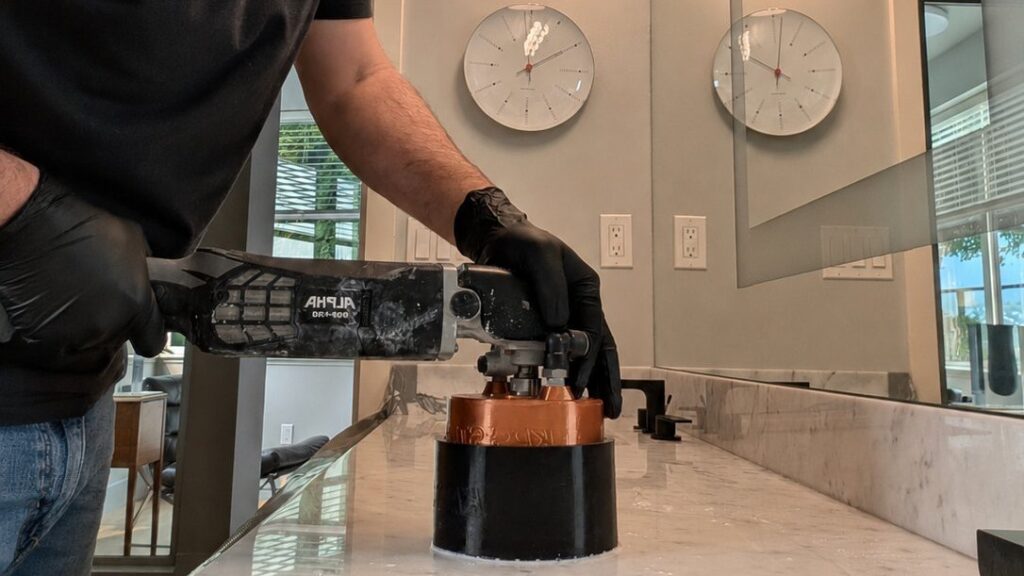
Nothing is quoted over the phone. Two granite counters that look identical can need very different work once you are standing in front of them.
We come and look, free and with no obligation, and the written quote is emailed to you afterwards. We check the condition of the surface, whether there is chip or crack damage that needs handling first, and what finish you have now. After enough years, that is something you see rather than something you test for.
Dust free, and nothing is added to the quote once work starts without you agreeing first.
On timing: a clean, polish and seal on a kitchen’s worth of counter is usually a short job. It runs longer when there is repair work first, or a large area. The real number is in your quote.
Want your granite looked at?
778-862-4998
In houses and condos, granite is a counter material: kitchen counters, islands, vanities and bar tops. Granite floors are effectively a commercial thing, turning up in lobbies, entrances and elevator surrounds rather than homes.
That distinction changes the job. A kitchen island is one surface with a few years of use on it. A lobby floor takes hundreds of people a day, plus luggage carts and grit tracked in off the sidewalk from October through March, and it wears in a path rather than evenly. You cannot polish the worn lane down the middle and leave the edges: the sheen will not match and it will look worse than before anyone touched it. Commercial granite gets read as a whole surface first, which takes more time on site before any work starts.
We cover Vancouver and the Lower Mainland: Yaletown, Coal Harbour and False Creek, downtown and the West End, Shaughnessy, Kerrisdale, Point Grey, Kitsilano and Dunbar, West Vancouver and the British Properties, North Vancouver, Burnaby, the Tri-Cities, Richmond, Surrey and White Rock, plus Whistler for commercial work.
What moves the price: the size of the surface, the condition, the stone and the finish. Our pricing page has the detail.
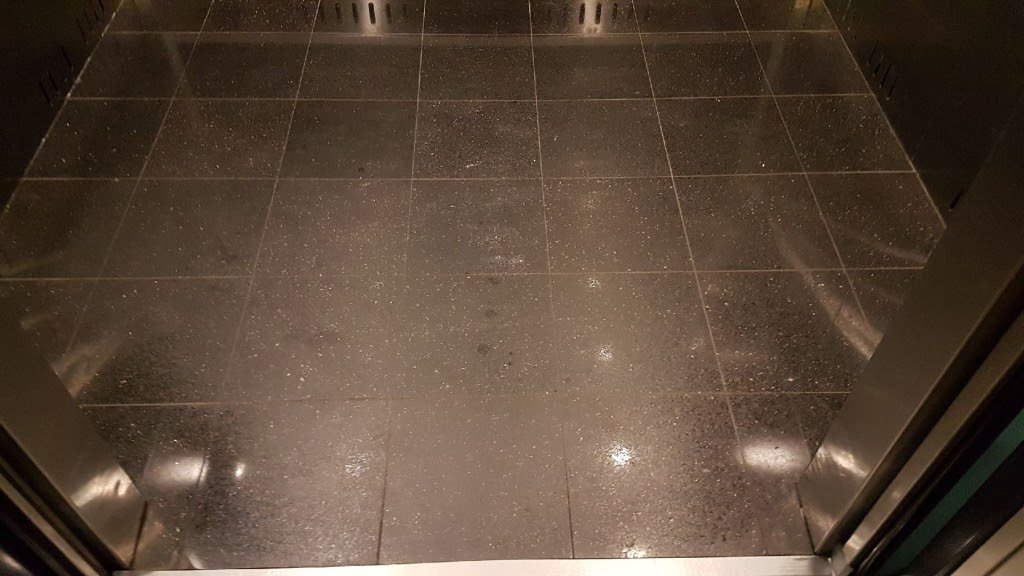
Before
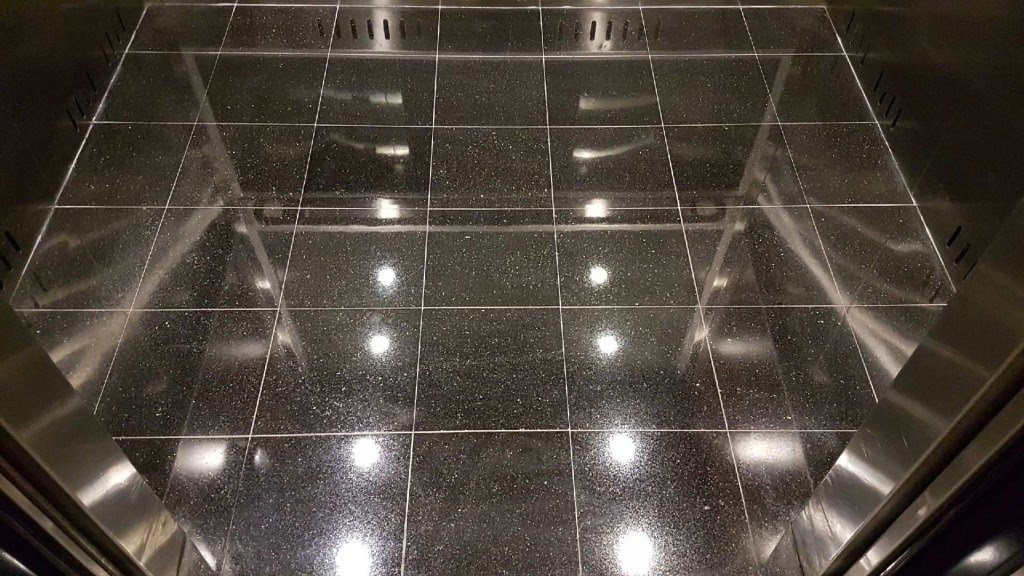
After
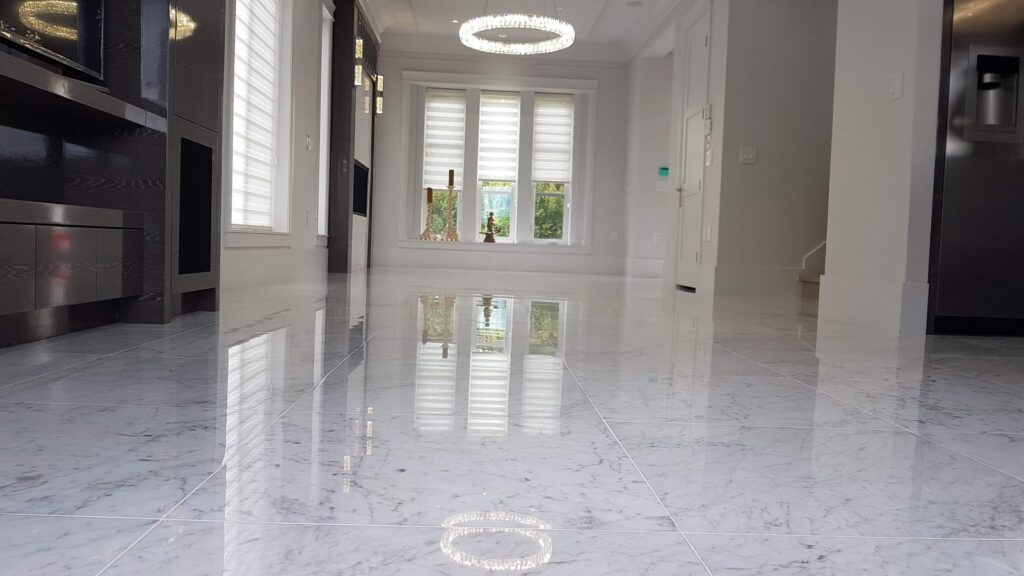
Granite elevator floor. Cleaned and polished; the ceiling lights say the rest.
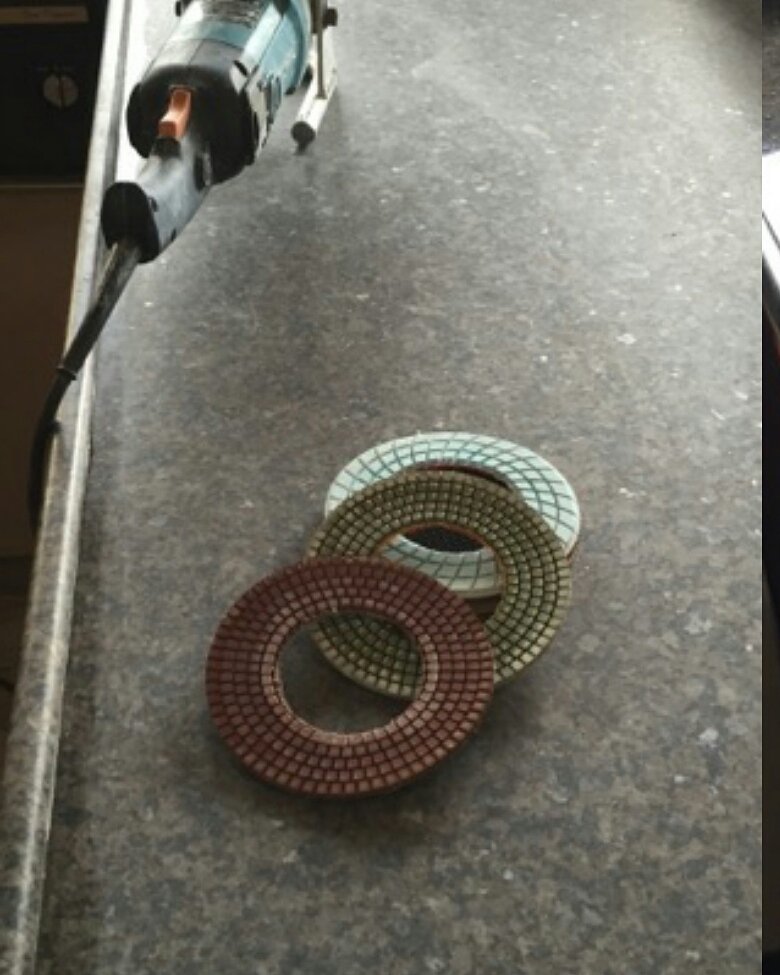
Before
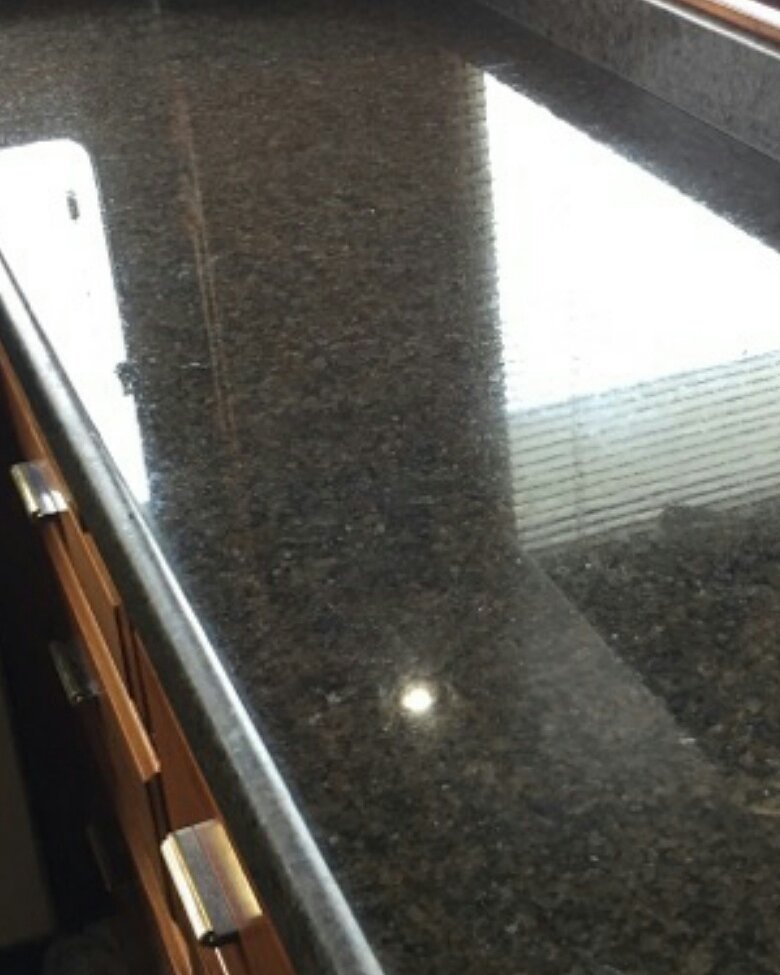
After
Granite counter. The pads in the before shot are the polishing pads; no coating goes on granite.
Test it rather than working to a calendar. Leave a few drops of water on the counter for a while: if it sits there and the stone stays the same colour, the seal is fine. If it soaks in and darkens the stone, reseal. Most penetrating sealers are designed to last three to five years, and because the sealer is absorbed into the stone rather than coating it, normal use does not scrub it off.
No. Sealing helps granite resist staining by slowing liquids on their way in, which buys you time to wipe a spill up. It is not a barrier, and oil left sitting long enough will still get in. It also does nothing for etching, on granite or any other stone. The good news is that granite stains far less readily than marble to begin with, so for most counters sealing is a sensible precaution rather than an urgent need.
Usually fine scratching rather than anything chemical, because granite resists acid well and true etching on it is uncommon. Abrasive pads and steel wool are the most frequent cause we find. Polishing brings the gloss back in most cases. What it will not always do is return the stone to its original factory finish, since that is applied with industrial equipment before installation, and some granites respond to hand polishing better than others.
Sometimes, and sometimes not, and it depends on the stone. That factory finish is put on with industrial machinery before the slab reaches your kitchen, and some granites take a hand polish beautifully while others are genuinely difficult. What you will get is a real improvement, and we will tell you which category yours falls into when we look at it rather than promising something the stone may not give.
Almost always just polishing, and this is why we do not call it restoration. Restoration implies taking the surface down with diamond abrasives, which granite rarely needs. Most granite counters want a clean, a polish and a seal. Diamond honing only comes into it when there is deeper damage, and chips or cracks are a separate repair that happens before any polishing.
Look at the pattern. Natural granite has mineral flecks that vary across the slab, so no two sections look the same. Quartz is engineered from crushed stone and resin, so its pattern tends to repeat and look more uniform. It matters because we work on natural stone only. If you are not sure, send a photo before booking and we will tell you which you have.
Send a photo or call. We will look at it on site and tell you honestly whether it is worth doing.
Free estimate. No obligation.