Based in Maple Ridge · serving Vancouver & the Lower Mainland
Mon to Sat, 8 to 6
Limestone
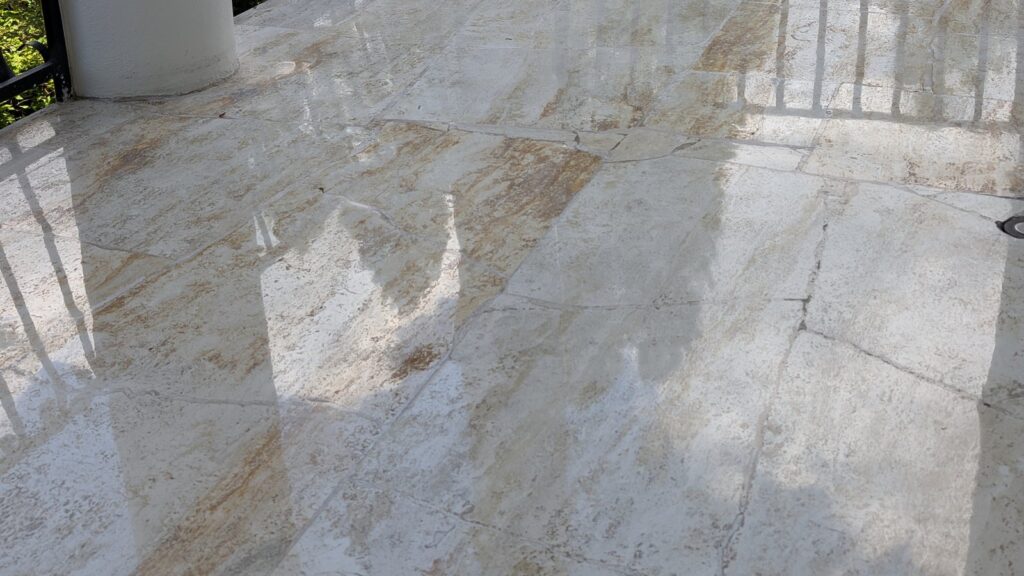
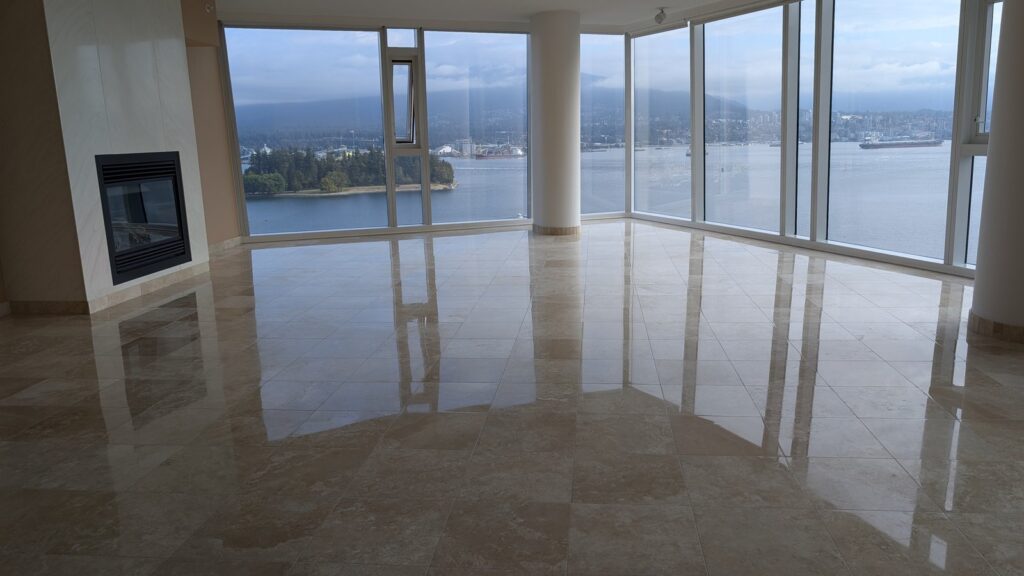
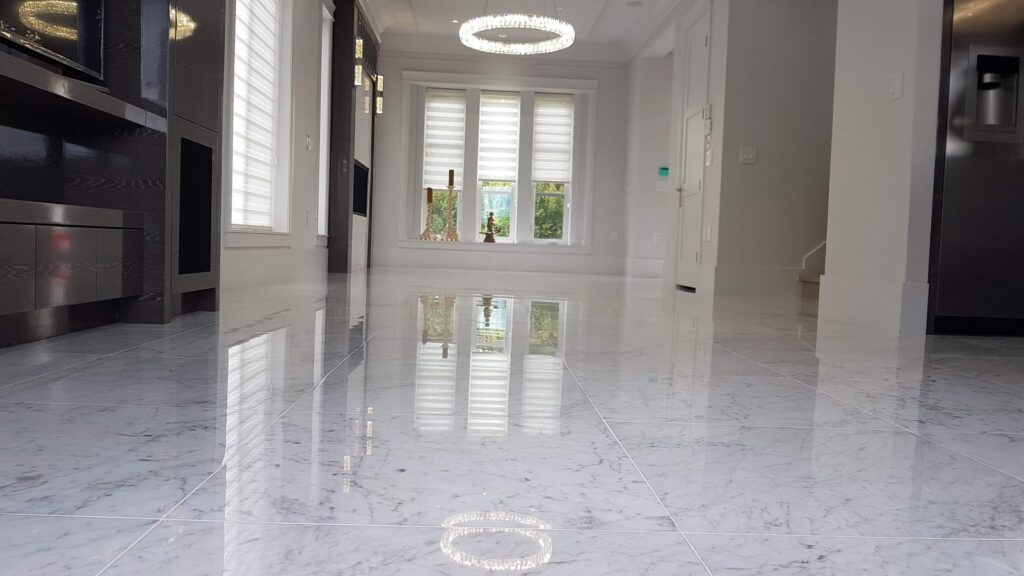
Limestone polishing fixes the three things that flatten a limestone floor or counter: etching from acid, scratches from grit, and traffic wear that has taken the finish off.
Free estimate, on site, with no obligation.
An etch is the dull ring by your sink. Limestone is calcium carbonate, soft and reactive, so wine, a lemon wedge or the wrong bathroom cleaner reacts with the surface and takes the finish off in that spot. Scrubbing never helps, because the mark is in the stone rather than on it. The tell is that the spot reads dull against the stone around it, and on darker limestone it looks grey.
Scratches show as thin lines running in one direction that catch the light at an angle. Grit tracked in on shoes, a dragged chair leg, sand off a beach bag left near a vanity.
Traffic wear is different again: whole sections gone flat and dull with no distinct marks, worn down by thousands of footsteps. It shows up in lobbies and entrances long before anyone complains about it.
Most people assume a mark is a stain and reach for a stronger cleaner, which on limestone usually makes it worse. How to tell an etch from a stain, and what a stain needs instead, is on our etch removal page.
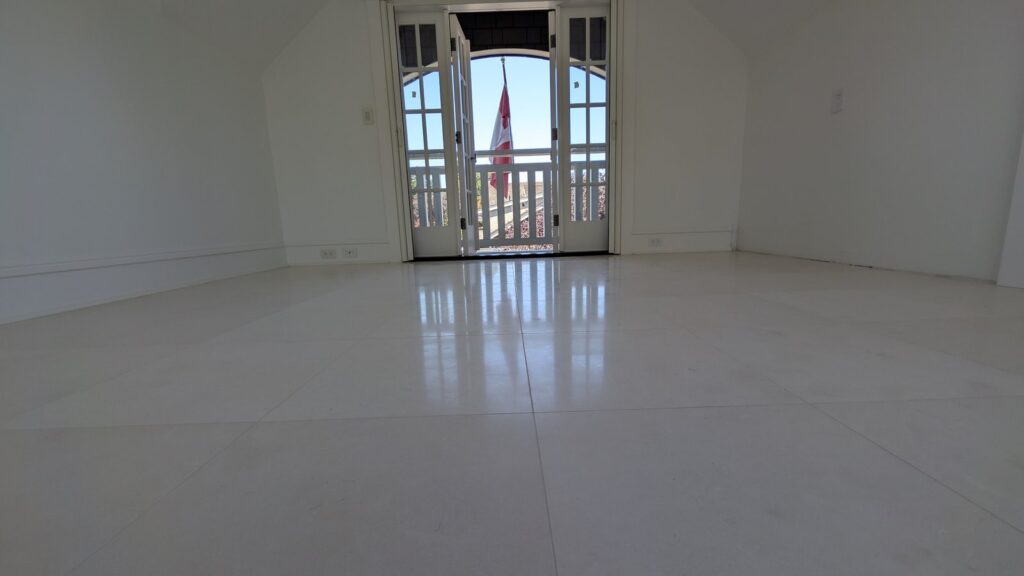
This is where limestone parts company with marble, and it is worth a minute before you book anything.
Honing is the diamond stage. It takes the surface down past the etching, the scratches or the wear. It leaves a flat, low-sheen finish. Polishing is the step after: a powder worked in with water and buffed until the stone reflects.
Limestone is softer and more porous than marble, so a full gloss can sometimes look harsh on it, and in a busy entryway it wears down faster than you would like. We get asked for a mirror polish on limestone floors more often than you would think. Sometimes that is exactly right. Often a honed finish suits the stone better and holds up longer. Kids, dogs or a strata entrance taking hundreds of people a day all point the same way, because a honed finish hides scuffs that a full polish shows off. On a quiet powder room vanity, polish may be precisely what you want.
We settle that with you before any work starts, because the finish decides how the stone looks and how it holds up for years. The same choice comes up on marble, and our marble polishing and honing page covers that side of it.
🚫 Chips, cracks and the holes that open up in a surface are a different job, filled with a colour-matched resin and ground flat rather than polished out. That is on our marble chip and crack repair page, which covers limestone too.
Need help with limestone polishing?
Nobody can quote limestone polishing from a photo, and be wary of anyone who offers to. Photos flatten depth, so an etch that looks like a light haze in a picture can turn out to be a deep patch. It takes kneeling on the floor with the light hitting the stone sideways.
So we come and look, free and with no obligation, and the written quote is emailed to you afterwards. We check how deep the damage runs, the finish you have now and the finish you want, and whether anything needs repairing before polishing starts. Two limestone counters that look identical can need completely different work.
On the day: the damage comes off with a diamond hone, run wet so the grit leaves in the slurry rather than into the air, then the finish goes back on. Nothing gets added to the quote once work starts without you agreeing to it first.
On timing, a vanity is often a few hours, a large kitchen can run to two days plus a return visit to seal, and a floor is anywhere from a day to a week depending on size and damage. Your quote carries the real number.
What moves the price: the size of the surface, how bad the damage is, the stone itself and the finish you choose. Our pricing page has the full breakdown and the minimum service call.
Call for a free on-site look.
778-862-4998
Limestone turns up across Greater Vancouver, and we work on it in both homes and commercial buildings. Vanity tops, shower surrounds and entryway floors in the character homes of Shaughnessy, Kerrisdale, Point Grey, Kitsilano and Dunbar. Lobby floors in hotels and strata buildings downtown, in the West End and across the Lower Mainland. The stone does not care where it lives: calcium carbonate reacts to acid the same way on a bathroom vanity as it does in a hotel entrance.
In a home the job usually starts small. A vanity with a cloudy patch near the soap dish. A shower wall that has lost its shine, with shampoo and soap runoff sitting on it every day. You want that fixed without ripping anything out, and that is what restoration does: we work on the stone that is already installed, so your vanity or shower surround stays where it is.
Commercial runs differently. A hotel lobby takes rolling luggage, wet umbrellas and thousands of footsteps a week. A strata entrance deals with rain and grit tracked in from October through March. In both cases the finish has to survive real traffic rather than just look good the day we leave, and that changes the decision between polish and hone as well as how often the floor needs attention.
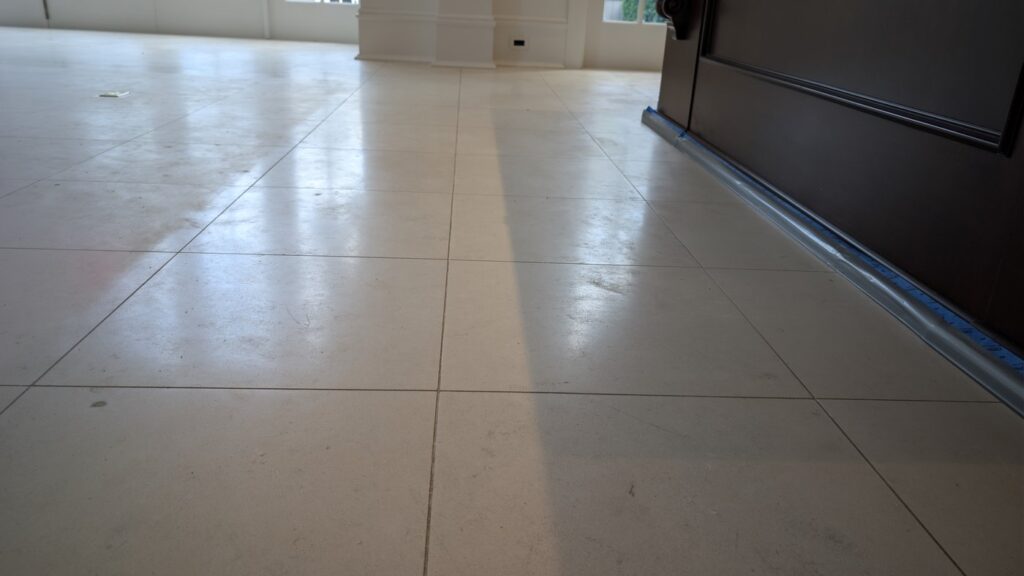
Before
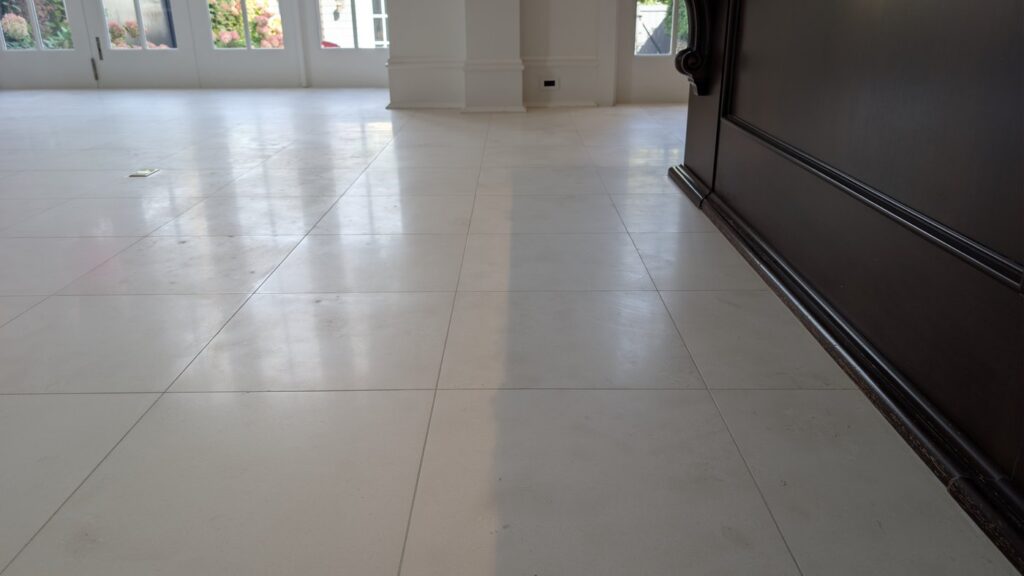
After
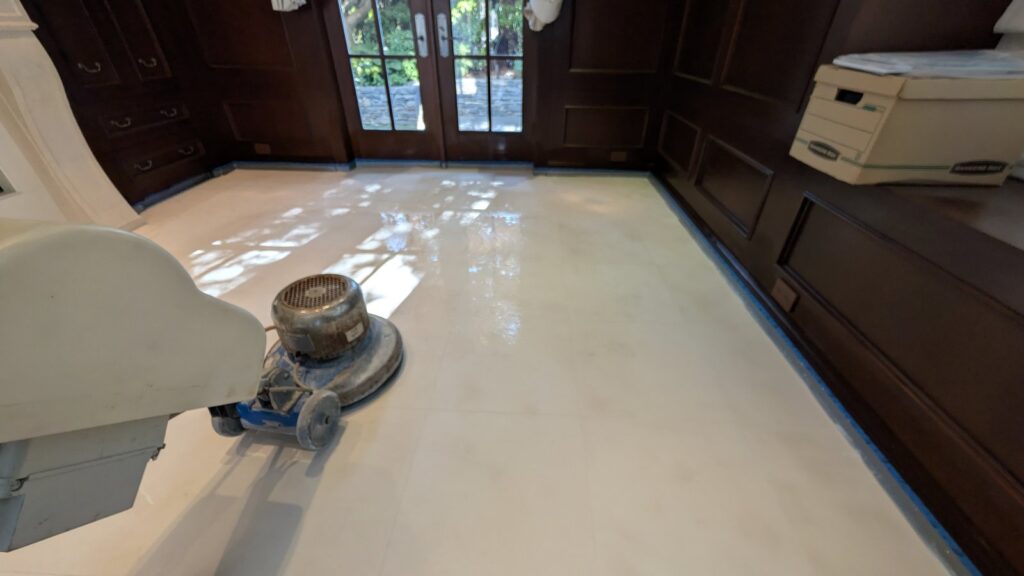
Limestone floor beside the cabinetry in a Point Grey home. Before: greyer and scuffed, taped off for the work. After: the same spot, clean and even.
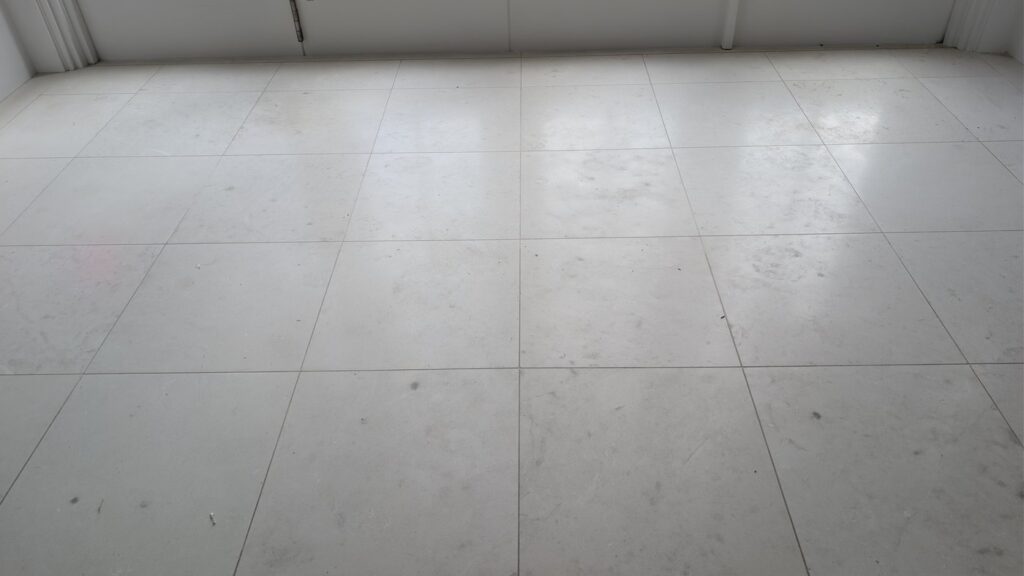
Before
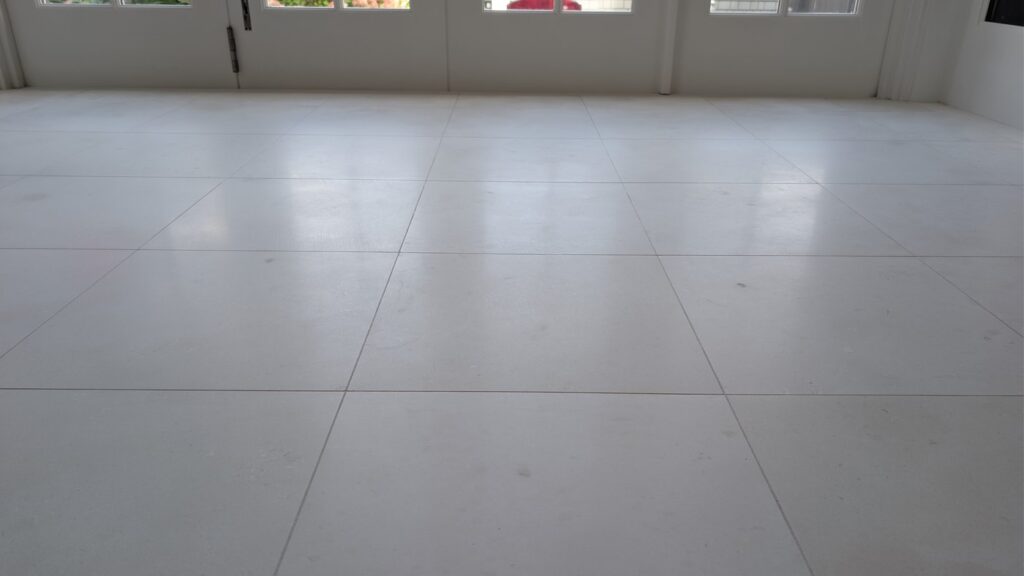
After
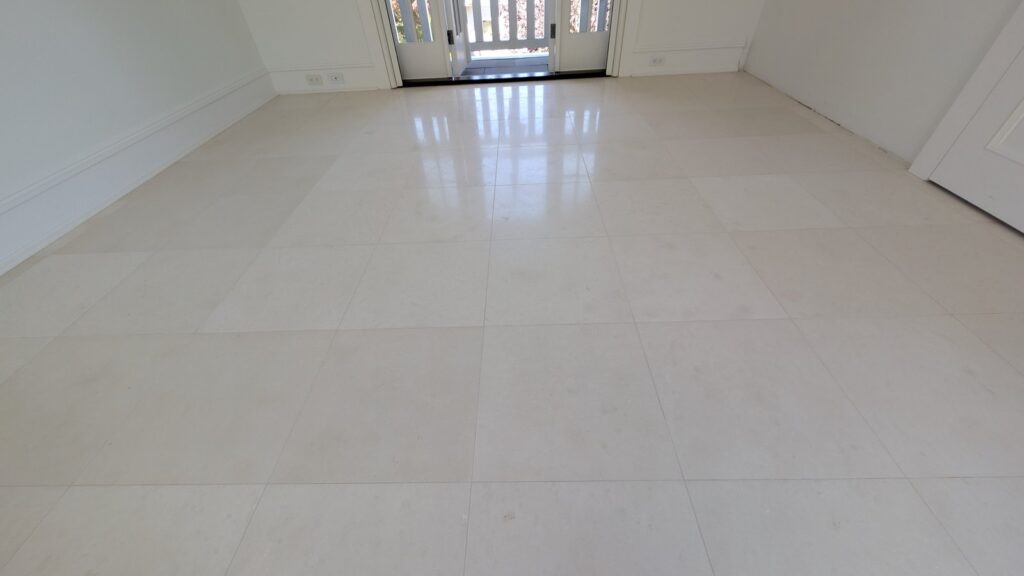
The open room on the same floor. Before: grey and spotted. After: clean, pale stone.
Clean it first, with a damp cloth and a pH neutral cleaner made for natural stone. If a light film lifts, that was residue. If the surface still looks dull once it is clean, the finish itself has gone and no product brings it back. On a floor or counter in daily use that is almost always the answer, and it needs at least a polish.
Honing is the diamond stage that removes the damage and leaves a flat, low sheen. Polishing comes after it and brings out shine and reflection. Limestone is softer than marble, so a full gloss can sometimes look harsh, and in a busy entryway it wears down faster. For a strata lobby or a kitchen with kids and pets, a honed finish tends to hide scuffs better. We walk you through which suits your space before starting.
No, and be careful of anyone who says they can. Photos flatten depth, so a light haze in a picture might be a deep etch. Someone needs to see the stone with light hitting it sideways to tell how far the damage runs. That is why we come and look in person, whether it is a kitchen counter or a building’s common area, and the written quote is emailed to you afterwards.
That ring is almost always an etch rather than a stain, from something acidic touching the stone. Wine, lemon juice and some bathroom cleaners all react with limestone because it is calcium carbonate. Scrubbing will not help, because the finish is gone in that spot rather than dirty. The tell is that the ring reads dull against the stone around it, and on darker limestone it looks grey. It needs polishing, not more cleaning.
Grit, usually. Tracked in on shoes, dragged furniture legs, or sand from a beach bag near a vanity. You will see them as thin lines running in one direction that catch the light at an angle. That is different from the flat, dull wear you see in busy entryways and lobbies after years of foot traffic. Each one needs a different amount of honing, so it helps to know which you have.
No. Avoid anything acidic on limestone, including vinegar, citrus cleaners and most generic bathroom sprays. Limestone is calcium based, so acidic products react with the surface and cause exactly the etching you are trying to prevent. Use a pH neutral cleaner made for natural stone for regular wipe-downs. That one habit protects the polish or hone we put on your floor or counter.
Send a photo or call. We will look at it on site and tell you honestly whether it is worth doing.
Free estimate. No obligation.