Based in Maple Ridge · serving Vancouver & the Lower Mainland
Mon to Sat, 8 to 6
Strata and property management
Getting a lobby floor looked after is only half work. The other half is presenting something to people who were not standing there when the marble started looking tired. We do both: the stone, and a quote built to survive a council meeting.
Free estimate, on site, with no obligation.
Walk your lobby and look down. What you see decides whether this is a maintenance conversation or a repair one.
Traffic wear is an even, flat, greyish haze with no distinct marks, worst near the doors and the elevators. Grit tracked in on shoes has acted like sandpaper and taken the finish off. Nothing is broken. The surface has given out under use, and it comes back.
An etch is a dull ring or patch in one spot with a defined edge, usually near a bar, a planter or a vanity. Something acidic sat there. It reads dull against stone that still has its shine.
A chip is missing material, caught on a fingernail, usually at a corner or an edge where something was dropped or a cart clipped it.
A crack is a line running through the stone, sometimes sounding hollow when tapped.
A stain is a dark patch that looks permanently wet and does not lighten as it dries. Something soaked in.
The first one is a schedule. The other four need looking at before anyone can tell you what fixing them involves.
This is the part most boards miss, and it is worth real money.
Your depreciation report gets reviewed every few years, and the lobby floor sits in it as an ageing asset. A worn stone floor frequently gets flagged for replacement when what it needs is restoration, and those are very different numbers in a reserve fund.
If your report is coming up for renewal, get the stone assessed before the engineer writes anything down. We will walk the common areas with you and tell you what condition the stone is genuinely in: whether it is a restoration candidate, whether there is chip or crack damage needing repair first, and whether polishing can extend the timeline before the next capital cost.
That gives your board a real figure to work with instead of a placeholder, and it costs nothing.
Need help with strata and property management?
We have seen enough of these to build around it, and it goes the same way most times.
Somebody notices the floor. It comes up at a meeting. A quote is requested, sometimes alongside two others. Then it waits for budget approval or an AGM, and that can be months.
So: the on-site look is free, and the written quote is emailed to you afterwards with enough detail to put in front of a council. There is no obligation and no call-out fee. You are not committed to anything until the work is approved, and the number does not move between the meeting and the job.
You do not need the budget squared away before you call. The visit is what gets you the figure you need to present.
Grinding and polishing stone makes fine dust. In a house that is an annoyance. In a lobby with residents walking through and an HVAC system pulling air past the work area, it is a genuine problem: dust settles on carpets, gets into vents and travels much further than you would expect.
So it does not become airborne in the first place. Water holds it down and what is left is captured at the tool as we work, rather than cleaned up afterwards.
On a live site that means: a contained work zone kept separate from foot traffic, the stone worked in sections with debris pulled out continuously, the finish checked under raking light as we go, and the area cleared and adjacent surfaces wiped down before the space reopens.
Scheduling is usually the first conversation, not the last. If your building runs early-morning cleaning crews or has a quiet window before check-in, that is when this happens.
Approving stone restoration is not like approving a paint touch-up, and the wrong answers cost you a floor.
We have walked into buildings where the last job left a dull path worn straight down the main traffic line within a year. Nobody had asked what finish was right for that stone.
Before you sign anything, get these answered in plain language:
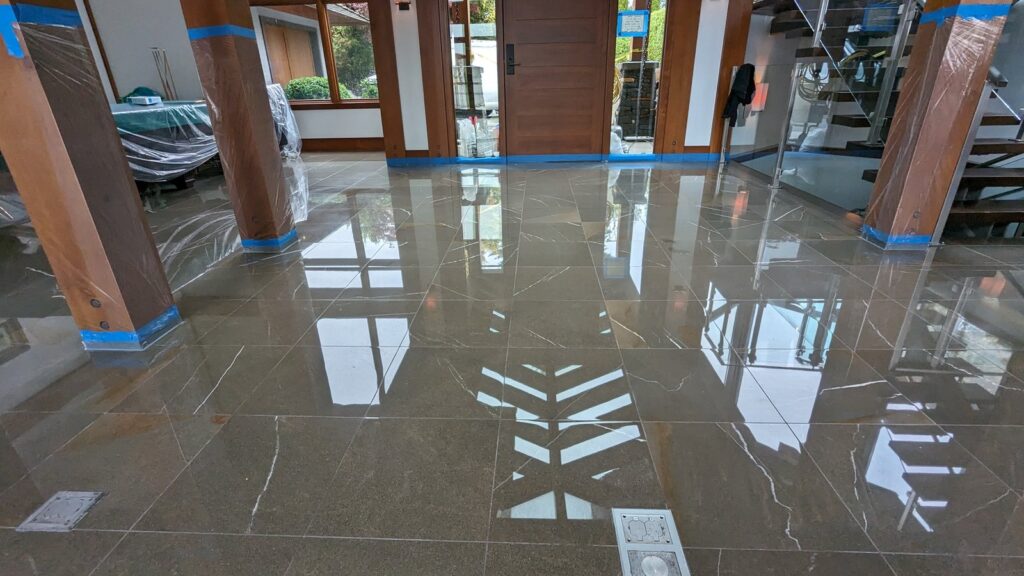
On timing: common-area floors run from a day to a week depending on size and condition, settled before scheduling rather than discovered partway through.
Need your building’s stone assessed?
778-862-4998
We see lobbies all over the region: downtown Vancouver and the West End, Yaletown, Coal Harbour and False Creek, North and West Vancouver, Burnaby, the Tri-Cities, Richmond, Surrey and White Rock, and Whistler.
Highrise strata with marble lobbies and entrances, mixed-use buildings with stone in shared areas, and hotels where the same floor takes guest traffic around the clock.
What moves the price: the size of the area, its condition, the stone, the finish, and access and timing, since overnight work is built into the quote rather than added afterwards. Our pricing page has the detail.
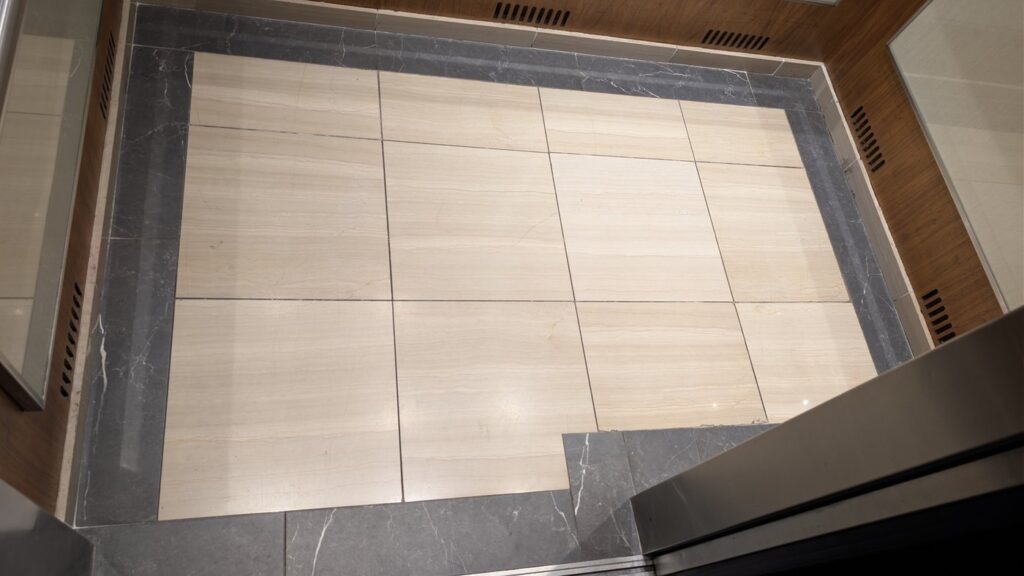
Before
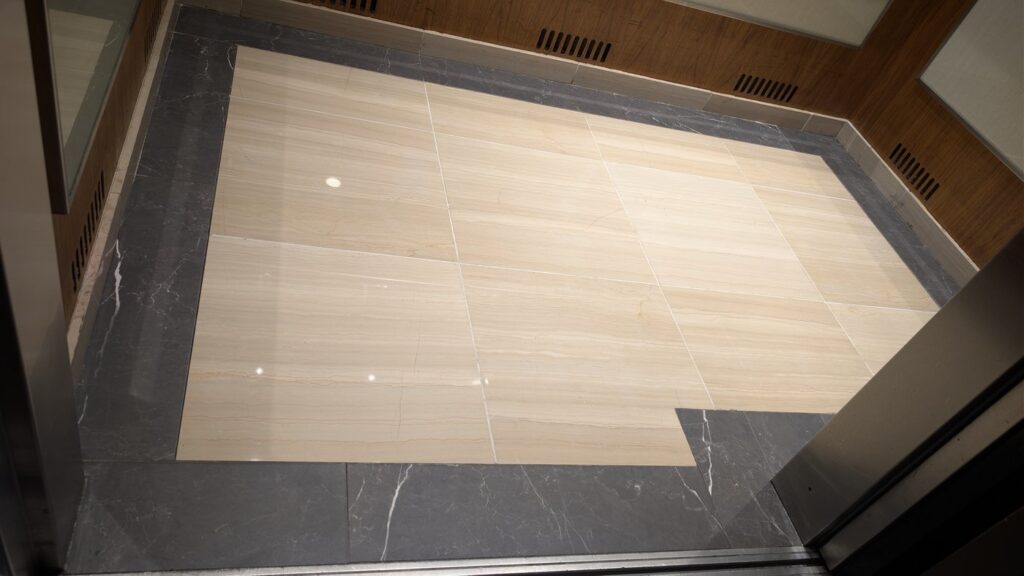
After
Elevator lobby, Olympic Village. Same angle, an hour apart.
Less than most councils expect. The work is dust free, so there is no powder settling on carpets or drifting into vents, and the work area is contained and kept clear of foot traffic. It is normally scheduled overnight or in a quiet window. The lobby stays usable throughout, and the scheduling conversation happens before anything is booked rather than after.
Yes, and it is built for exactly that. The on-site look is free, and the written quote is emailed to you afterwards with enough detail to put in front of a council alongside other bids. There is no obligation and no call-out fee, you are not committed until the work is approved, and the number does not change between the meeting and the job, however long the approval takes.
Often it is not, and it is worth checking before the report is finalized. Worn stone gets flagged for replacement when what it actually needs is restoration, because the surface has given out while the stone underneath is sound. Those are very different figures in a reserve fund. Get the stone assessed before the engineer writes it up, and your board has a real number instead of a placeholder.
It follows your traffic rather than a calendar. The entrance path and the area near the elevators wear far faster than quiet corners, so a sensible schedule treats them differently rather than doing the whole floor every time. Booking before the wet season rather than after the damage shows costs less, because the longer wear runs the deeper the honing has to go.
We would advise against it, and this is where a lot of buildings get burned. The sheen on a freshly polished lane will not match the stone around it, and the floor ends up looking worse than before anyone touched it. The whole surface gets read first so it finishes level. It takes more time on site before any work starts, and it is the difference between a floor that looks right and one that looks patched.
Yes to both, plus RAKU certified applicator, and the paperwork is produced before anyone steps on site rather than after you ask for it. It is usually the first thing a facility manager wants, and reasonably so.
Send a photo or call. We will look at it on site and tell you honestly whether it is worth doing.
Free estimate. No obligation.