Based in Maple Ridge · serving Vancouver & the Lower Mainland
Mon to Sat, 8 to 6
Stain removal
A stain is something that has soaked into your stone and darkened it from the inside: cooking oil, red wine, coffee, rust from a planter that sat too long. It cannot be scrubbed off, because it is not on the surface.
Free estimate, on site, with no obligation.
Worth two minutes, because most of the marks people call us about turn out to be the other thing.
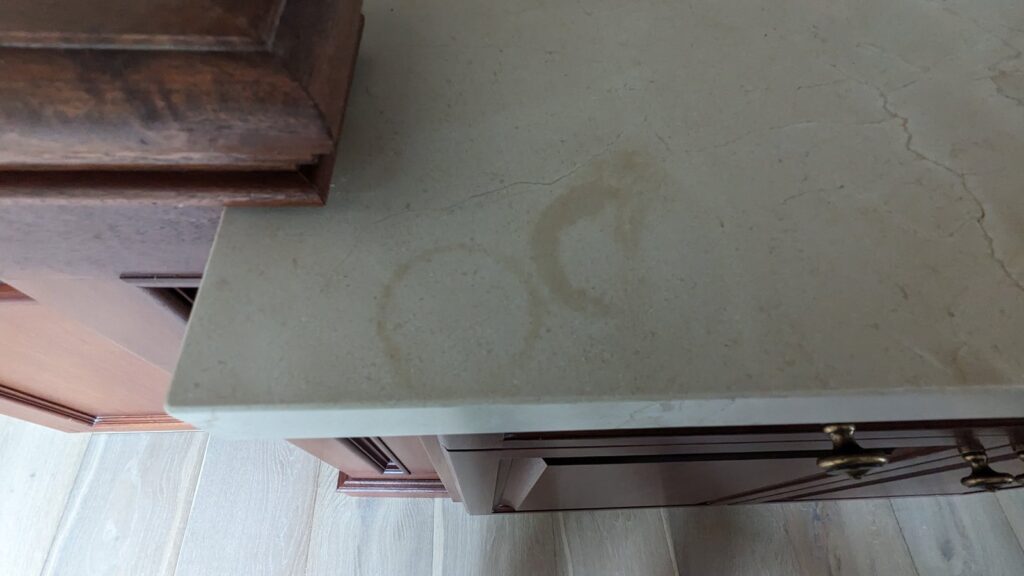
A stain is added colour. Something soaked in and darkened the stone. The surface is still as glossy as the rest of the counter, and the edge usually spreads and feathers where the liquid ran.
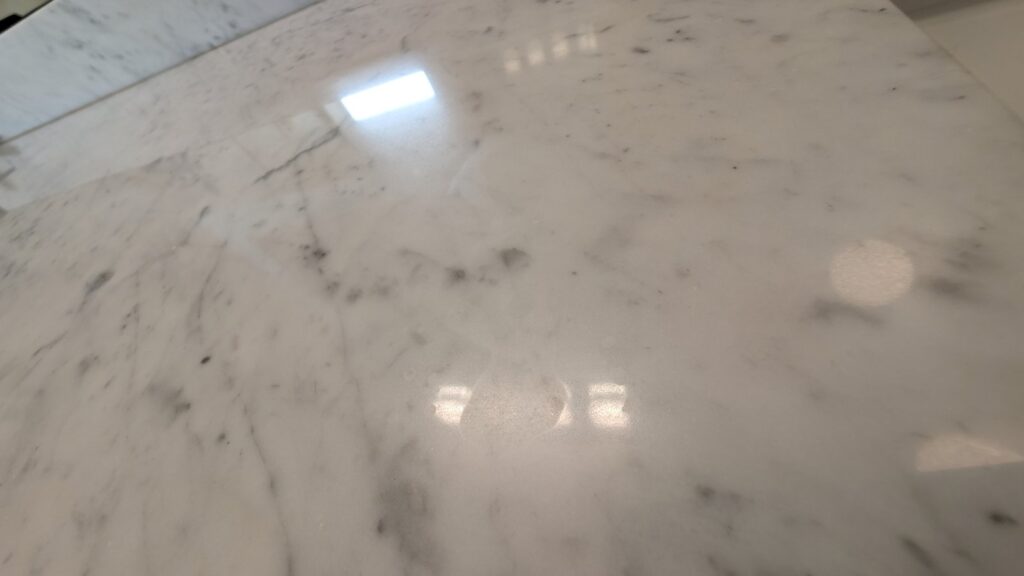
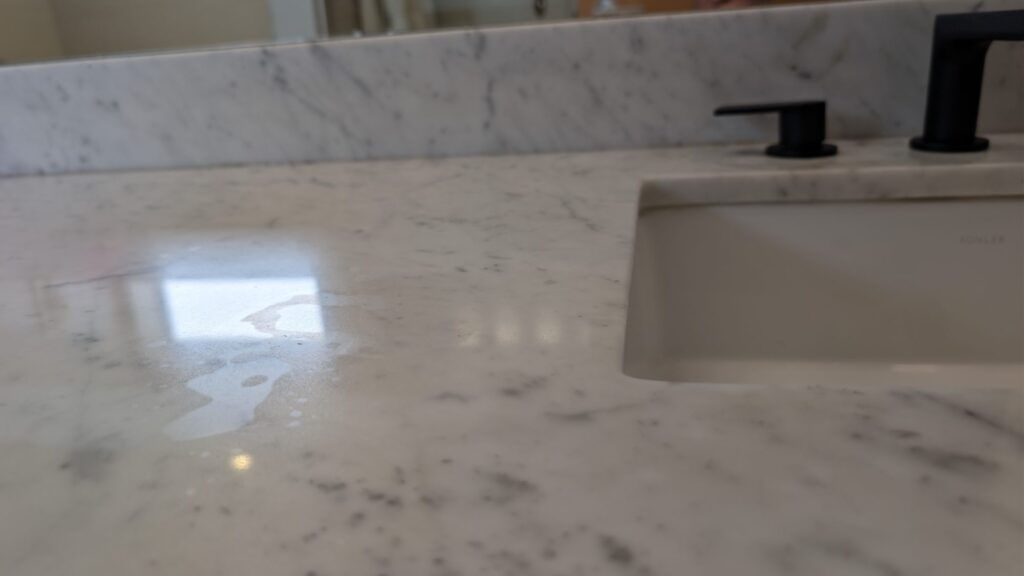
An etch is missing shine. No colour has gone in. Acid has taken the finish off in that spot, so it reads dull against the stone around it, and on darker marble it looks grey. It takes the shape of whatever sat there, so a wine glass leaves a clean ring.
The quickest way to tell them apart: look at the shine, not the colour. If the mark is darker but still glossy, it is a stain. If it is the same colour but flat, it is an etch, and it needs polishing rather than drawing out. Our etch removal page covers that side of it.
Both can turn up on the same counter after one bad spill, which is one of the reasons we look before quoting.
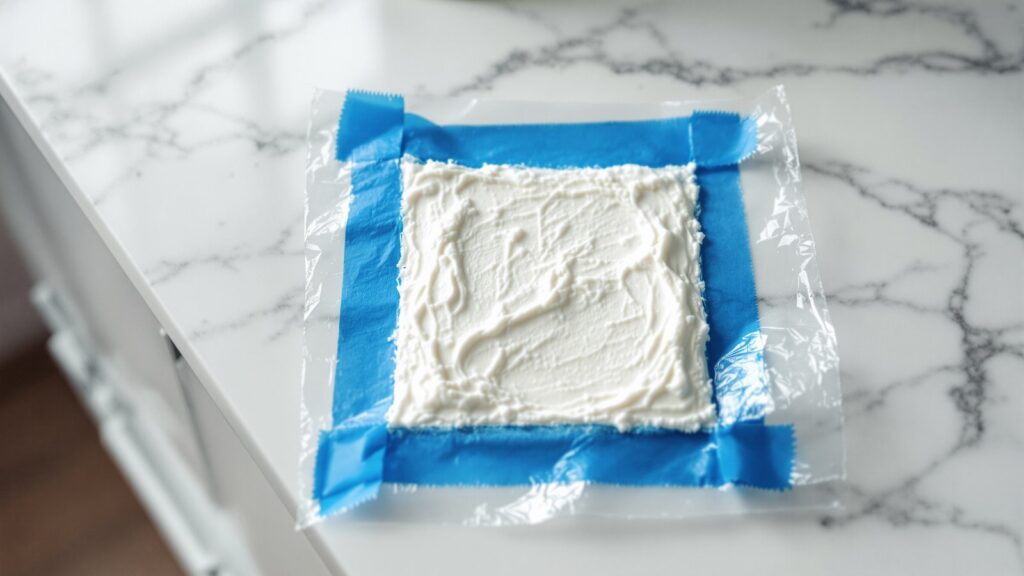
A poultice is the method for pulling a stain back out of stone. It is a paste, applied over the stained area and left in place, and it works by drawing the staining material up out of the pores as it dries. It is slow by design, because the stain went in slowly.
What decides whether it works:
Sometimes a stain does not come out completely. We will tell you that when we look at it rather than after taking your money, and on old oil in a porous stone it is a real possibility.
If you would rather try it yourself first, that is a reasonable thing to do on a small fresh mark, and our guide to getting stains out of marble walks through what is safe to attempt and where it stops.
Need help with stain removal?
Nothing is quoted over the phone, because a photo cannot tell you how deep a stain has gone or what caused it. Send one anyway, though, because it is usually enough to tell you whether you are looking at a stain or an etch, and whether it is worth anyone coming out.
On timing: a fresh, shallow stain can be dealt with quickly. Older stains, and oil especially, can need more than one application, so it can run across more than one visit. You will know which you are looking at before anything starts.
Got a mark that will not come out?
778-862-4998
We work throughout Vancouver and the Lower Mainland: Yaletown, Coal Harbour and False Creek, the West End, Shaughnessy, Kerrisdale, Point Grey, Kitsilano and Dunbar, West Vancouver and the British Properties, North Vancouver, Burnaby, the Tri-Cities, Richmond, Surrey and White Rock, plus downtown hotels and strata buildings and Whistler for commercial work.
Kitchen islands and counters are where most stains happen, because that is where oil, wine and coffee live. Vanities get cosmetics and hair products. Entry floors get rust from planters and boot trays that stayed wet through the winter.
What moves the price: the size of the surface, how bad the staining is, the type of stone and the finish. Our pricing page has the full breakdown and the minimum service call.
Look at the shine rather than the colour. A stain is darker than the stone around it but still glossy, and the edge tends to spread and feather where the liquid ran. An etch is the same colour as the stone but flat, and it takes the shape of whatever sat there, so a wine glass leaves a ring. The two need opposite treatments, which is why it is worth getting right before anyone touches it.
Most can, but not all, and we would rather say so up front. Fresh spills come out reliably. Old oil in a porous stone is the hardest case, because it has had years to travel, and sometimes it lightens rather than disappearing entirely. What usually makes a stain harder to shift is not the stain itself but what has been tried on it: acidic or abrasive cleaners leave etching on top of the stain, and then there are two problems to fix.
Longer than most people expect, because a poultice works by drawing the stain out slowly rather than lifting it off. It goes on, it stays on, usually 12 to 24 hours depending on the stain, and it is left to do its work. A fresh, shallow mark can be dealt with in one go. A deep or old stain, particularly oil, can need more than one application and sometimes a second visit. You will know which you are dealing with after the on-site look.
Not the one we removed. What causes a repeat is the same thing happening again in the same spot, which is why we go through what caused it before leaving. Sealing helps here: it slows liquids down on the way in and gives you time to wipe a spill up. It does not make stone stain-proof, and it does nothing for etching, but on a counter that has already stained once it is worth having.
Yes. Travertine and limestone are more porous than marble, so they stain more easily and can need longer drawing out. Granite stains far less often because it is denser, so what looks like a stain on granite is usually worn sealer or fine scratching instead. Send a photo if you are not sure which you are looking at.
That is useful information rather than a failure. It usually means one of two things: the mark was never a stain and is actually an etch, which no poultice will touch, or the staining has gone deeper than a single application reaches. Either way it is worth having someone look, because the two lead to completely different work and there is no point repeating something that has already told you it is not the answer.
Send a photo or call. We will look at it on site and tell you honestly whether it is worth doing.
Free estimate. No obligation.