Based in Maple Ridge · serving Vancouver & the Lower Mainland
Mon to Sat, 8 to 6
Stone care guide
You set a glass of wine down on the counter, and the next morning there is a dull ring where it stood. You wipe it, and nothing changes.
Free estimate, on site, with no obligation.
That is an etch, and it is the most common mark on marble there is. The good news first: your marble is not ruined. An etch is damage to the surface, and the surface can be brought back. But nothing in a spray bottle will do it, and knowing why saves a lot of wasted effort.
Marble is calcium carbonate. So is limestone, and so is travertine. Calcium carbonate reacts with acid, and when something acidic sits on the stone it dissolves a very thin layer of the surface right where it landed.
On polished marble, that surface layer is the shine. The polish is not a coating sitting on top of the stone; it is the stone itself, worked smooth enough to reflect light. Take a microscopic layer off in one spot and that spot stops reflecting. It goes dull.
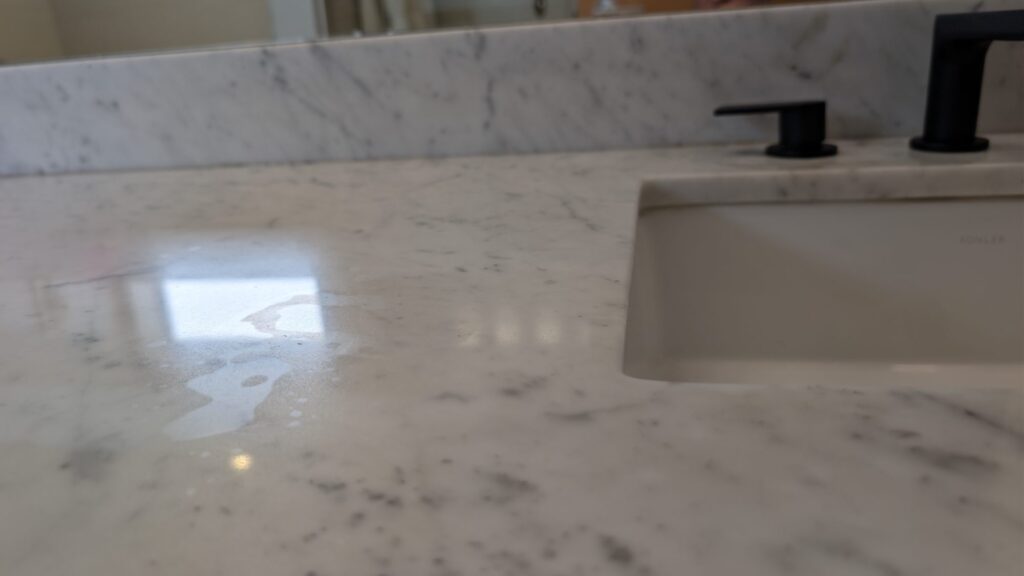
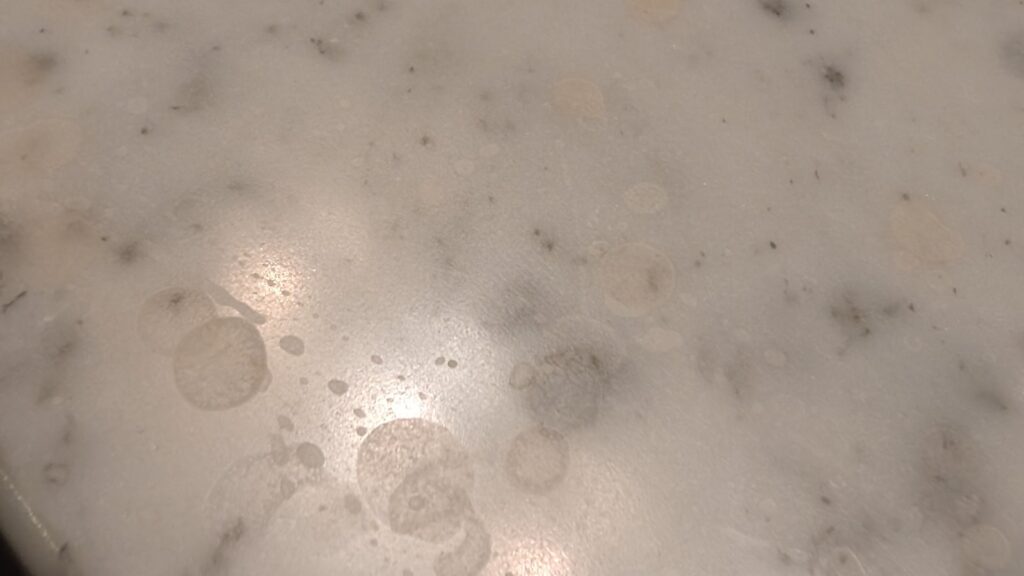
That is all an etch is: missing shine, in the shape of whatever caused it. A glass leaves a ring. A drip leaves a drip. A splash of vinaigrette leaves a scatter of small dull spots.
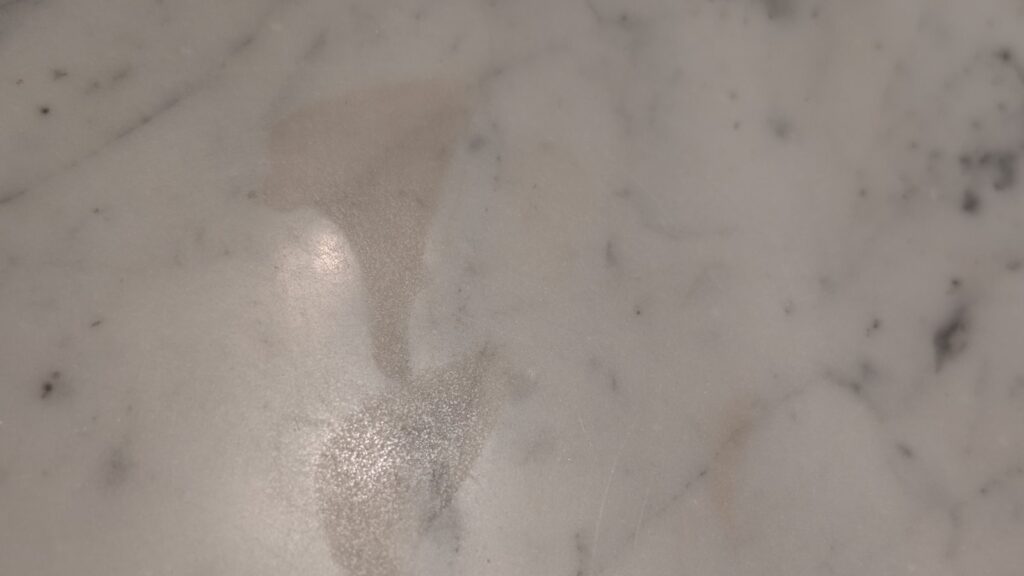
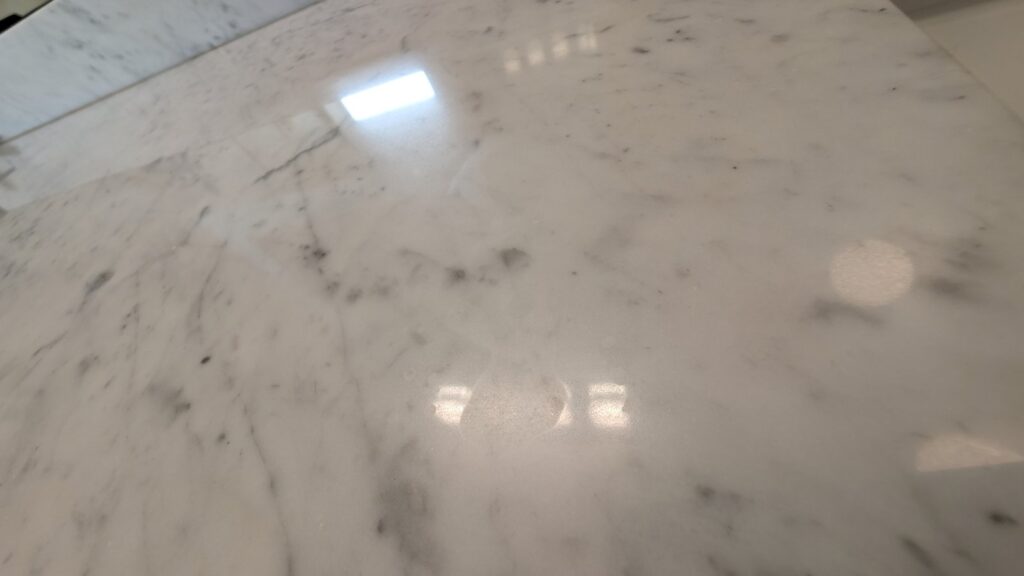
Look at the shine, not the colour. An etch is the same colour as the stone around it, but flat where everything else is bright. Stand to the side and look along the surface towards a window; the mark shows up as a patch that does not reflect. On darker marble, an etch usually reads grey.
You may have read that you can feel an etch with your fingertip or catch it with a fingernail. Most etching can’t be felt at all. Only severe cases, where acid sat for a long time or kept coming back, start to feel rough. Trust your eyes.
If the mark is darker than the stone and the surface is still shiny, it is probably a stain rather than an etch, and that is a different problem with a different fix. The guide on how to get stains out of marble covers how to tell the two apart and what to try for a stain.
Need help with marble etching?
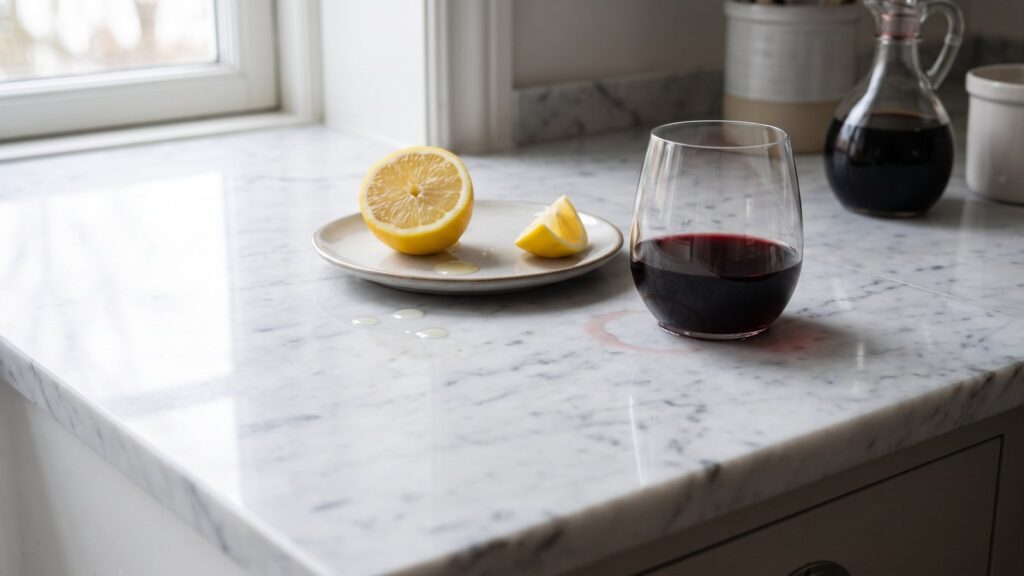
Anything acidic, left long enough. In a kitchen or bathroom that covers a lot more than people expect:
Water rings on marble are what etching is. A glass goes down, it etches the stone, and it shows up as a ring. Most calls about “water rings” are exactly this.
What does not cause it: Vancouver’s damp air does not etch stone, and neither does the water here. Etching is acid meeting calcium, nothing else.
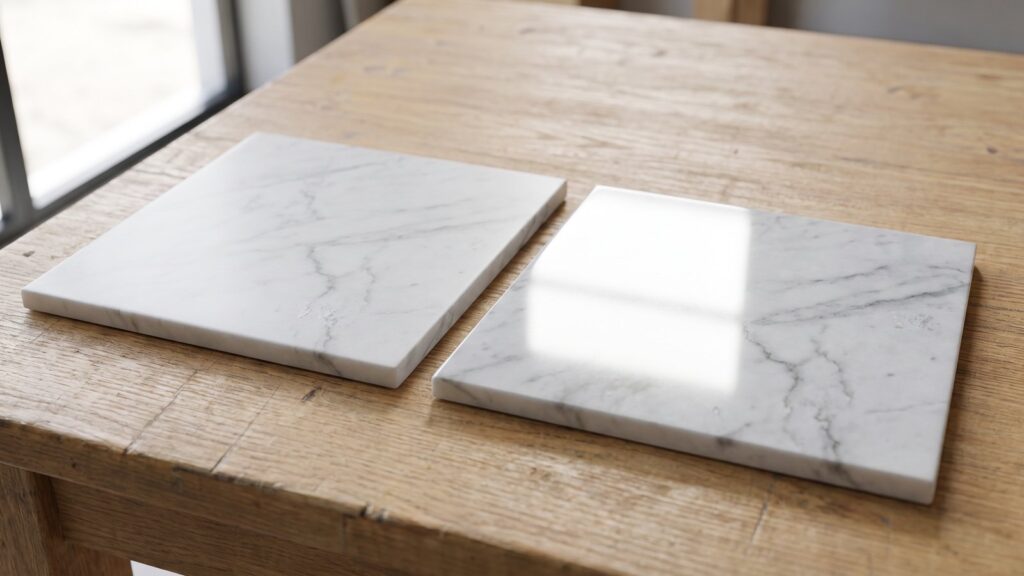
Dull stone usually comes from one of three things, and only one of them is etching:
One quick check: if a damp cloth makes the haze disappear, it was residue sitting on the surface, not damage. If the dullness stays, it is in the stone itself.
Very rarely. Granite is a different kind of stone, made of much harder minerals, and everyday kitchen acids don’t touch it. If you have a dull ring on a granite counter, it is more likely residue or a film than an etch. Granite care is its own subject, covered on the granite polishing and sealing page.
Limestone and travertine are the opposite: being calcium carbonate too, they etch just like marble, and often more easily. See the limestone and travertine pages.
Honed marble etches just as easily as polished marble. The difference is that a honed surface is already matte, so a dull spot on it is much harder to see. That is one reason some people choose a honed finish for a busy kitchen.
On polished marble, even a light etch stands out, because the contrast between dull and shiny is exactly what your eye picks up.
Not with cleaners. Because an etch is missing surface rather than something sitting on it, there is nothing to dissolve or lift. Scrubbing harder spreads the dullness. Reaching for a stronger product usually means a more acidic one, which makes the mark bigger. It is the most common way a small ring turns into a dull patch the size of a dinner plate.
What about polishing powders and etch remover kits? We strongly advise against them. They are polishing compounds you rub in by hand, and they tend to leave a patch with a different sheen from the stone around it, which usually stands out more than the mark you started with. Getting the sequence wrong leaves a patch that looks worse than the etch did, and then there is more to fix.
Professionally, an etch comes out mechanically. A diamond hone takes the surface down past the damage, and then the finish is brought back: a polishing powder worked in with water and buffed to a shine, or buffed to a matte hone if that suits the room.
Expect the whole area to be refinished, not just the mark. A repaired spot comes back looking new, and if the stone around it is even slightly worn, the new spot stands out against it. On a counter or a floor, refinishing the whole surface is what makes it read as one piece of stone again.
How long it takes depends on the size of the surface and how deep the damage runs. A vanity can be a few hours; a large floor can take days. We look at the stone in person first and email the quote afterwards. The full process is on the etch removal page.
Sealing does not stop etching. A penetrating sealer helps marble resist stains by slowing down how fast liquid soaks in. It does nothing to stop acid reacting with the surface, on any stone. Sealing is worth doing for stains, as the marble sealing page explains, but it won’t protect you from a lemon wedge.
For any of those, the etch removal page covers how the repair works. Don’t replace, restore.
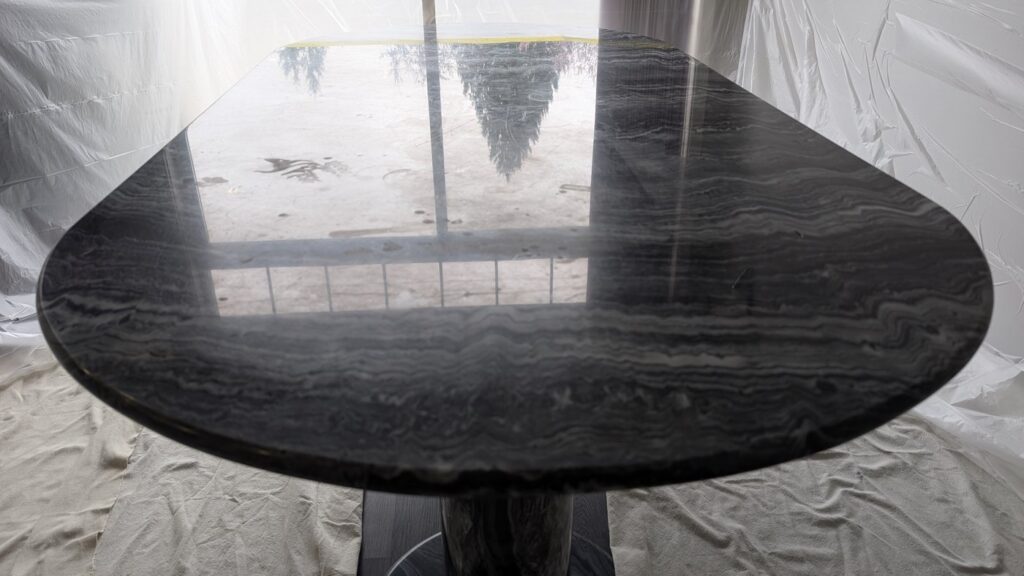
Before
After
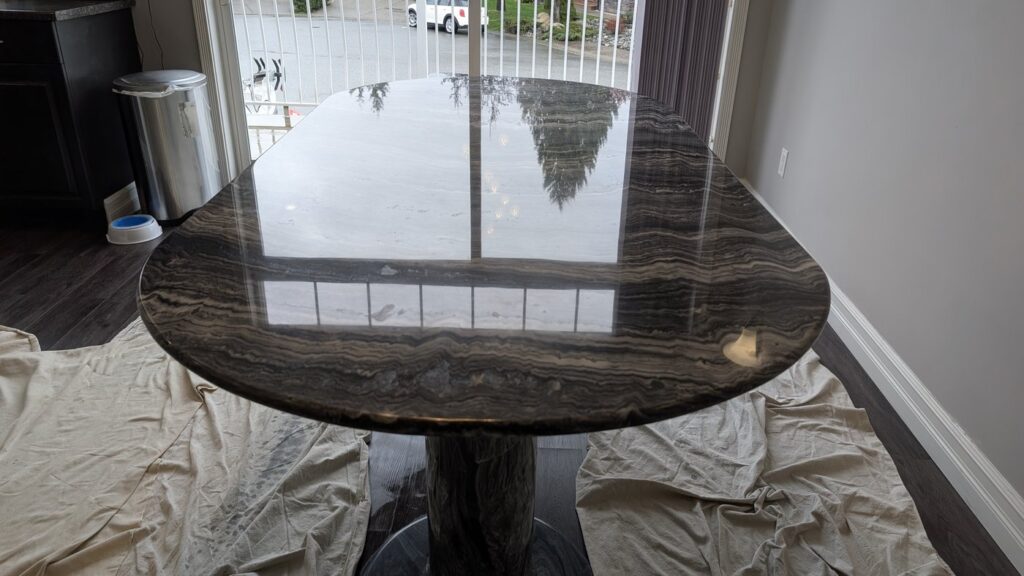
A dark marble dining table. Before: etch marks show as dull, greyish patches in the reflection. After: honed and polished, the reflection is clean again.
Etching is a dull mark where something acidic has dissolved a very thin layer of the stone’s surface. Marble is calcium carbonate, which reacts with acids like lemon juice, wine, vinegar and many household cleaners. On polished marble the surface layer is the shine, so an etched spot loses its reflection and looks flat compared with the stone around it.
Usually not. Most etching cannot be felt with a fingertip or a fingernail. Only severe etching, where acid sat for a long time or kept landing in the same spot, starts to feel rough. The reliable sign is visual: the mark is dull where the rest of the stone is shiny, and on darker marble it often looks grey.
No. A penetrating sealer helps marble resist staining by slowing down how quickly liquids soak in, but it does nothing to stop acid reacting with the surface. Sealed marble etches just as easily as unsealed marble. To prevent etching, keep acidic food, drinks and cleaners off the stone and wipe up spills right away.
Anything acidic. That includes vinegar, lemon-based cleaners, glass cleaners, and products sold for removing soap scum, rust or limescale. Avoid abrasive powders and scrubbing pads as well, because they scratch the finish. For everyday cleaning, use a pH neutral cleaner made for natural stone, or warm water and a soft cloth.
No. An etch is surface damage, and the surface can be brought back by honing the damaged layer off and restoring the finish. In most cases the whole counter or floor area is refinished at the same time so the repair does not stand out. Replacing marble because of etching is rarely necessary.
Very rarely. Granite is made of much harder minerals and everyday kitchen acids do not affect it. Limestone and travertine, on the other hand, are calcium carbonate like marble and etch just as easily, often more so.
Send a photo or call. We will look at it on site and tell you honestly whether it is worth doing.
Free estimate. No obligation.