Based in Maple Ridge · serving Vancouver & the Lower Mainland
Mon to Sat, 8 to 6
Terrazzo
Terrazzo is chips of marble and other stone set in cement or epoxy, then ground flat and polished. It was made to be ground and polished, so when a terrazzo floor goes dull or cracks, that's how it comes back.
Free estimate, on site, with no obligation.
A terrazzo floor laid 50 years ago can usually be brought back to its original pattern, because the chips run all the way through. Take off the worn top and there’s more of the same floor underneath.
That’s why replacing it rarely makes sense. Ripping out terrazzo is slow and expensive, and whatever goes down in its place won’t match the building. If a strata council is talking about covering an old terrazzo lobby, it’s worth finding out what the original floor would look like restored before the vote. Once it’s covered, getting back to it is a much bigger job.
Most of what people call damage is the surface. The floor underneath is nearly always sound.
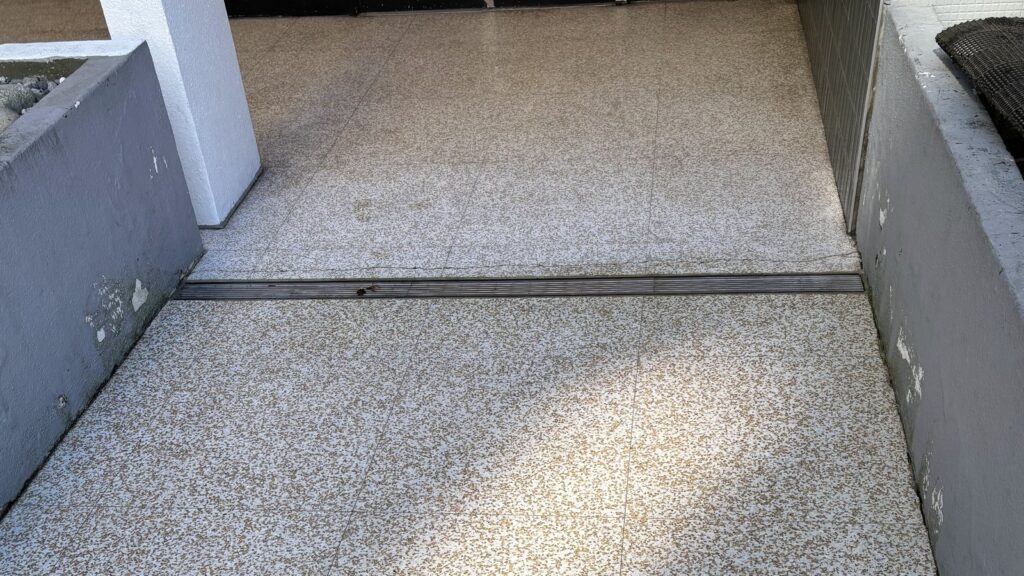
The same three things that dull any stone floor.
Old wax and floor finish is the other usual suspect. Terrazzo was often coated for years with a finish that builds up, scuffs and yellows, and the floor looks tired no matter how often it’s mopped. It has to come off before the floor can be restored, so stripping it is part of the job.
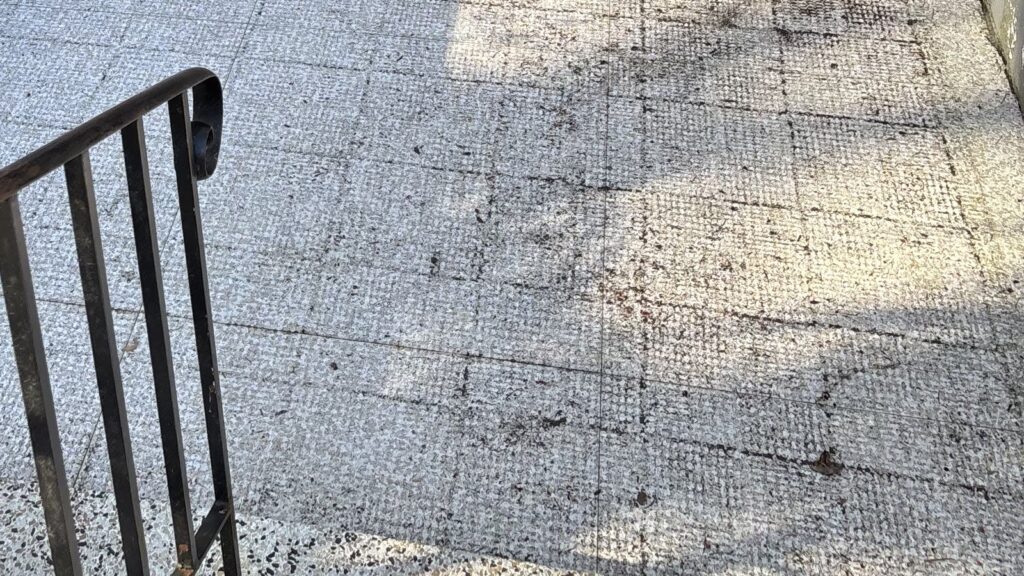
Need help with terrazzo restoration and polishing?
A stain is darker than the floor around it, or a different colour. Cement terrazzo is porous, so oil, rust and spills can soak into the binder and the chips. A stain is drawn out with a poultice, the same as on marble, before the floor is refinished, because polishing over it only gives you a shiny stain.
Terrazzo is bonded to the concrete slab underneath, so when the slab shifts or shrinks, a crack often comes up through the floor along the same line, sometimes straight across several panels. Chips happen at doorways and edges where carts and furniture hit it.
Cracks and chips are filled with a material matched to the floor, left to cure, then ground back level. A repair on a worn floor looks newer than everything around it, so we usually restore the surrounding area too, and often the whole floor, so it reads as one surface.
Two honest limits. A matched fill comes close, but a mix of coloured chips can’t always be matched exactly. And if the slab is still moving, a filled crack can open again. A section that sounds hollow when you tap it means the bond underneath may have let go, which is more than a surface repair.
Older floors often carry chips patched years ago with plain grey cement or the wrong filler. They stand out once the floor around them comes up clean, and they can be dug out and refilled closer to the original.
Honing comes first. Diamond abrasives, run wet, take the surface down past the scratches, etches and wear, one finer grit at a time. A walking path worn into a dip can be levelled too, within a limit: how much can come off depends on how deep the wear goes, and we’ll tell you when we look at the floor.
Polishing follows: a powder worked in with water and buffed until the floor shines. We can stop before that for a softer matte look. A high gloss looks lovely in a quiet front entry. In a busy lobby it shows every footprint and can feel slick under wet shoes, so the finish is worth choosing for the traffic the floor gets.
We refinish the whole floor or the whole area. Doing only the worn path leaves a patch that never matches the rest.
Sealing helps on cement terrazzo, which is porous. A penetrating sealer soaks in and leaves no film, so it doesn’t change how the floor looks, and it slows spills on the way in. It won’t make the floor stain-proof, and it does nothing for etching.
We don’t put wax or acrylic coatings on terrazzo. They look good for a few weeks, then scuff along the walking paths, hold onto dirt and yellow, and sooner or later they have to be stripped off again.
Cement or epoxy terrazzo? Older floors are almost always cement. Epoxy terrazzo came later and is common in newer commercial buildings. The process to get the finish is much the same for both. The difference is at the end: cement terrazzo gets a penetrating sealer, and epoxy terrazzo we usually finish with a crystallizer.
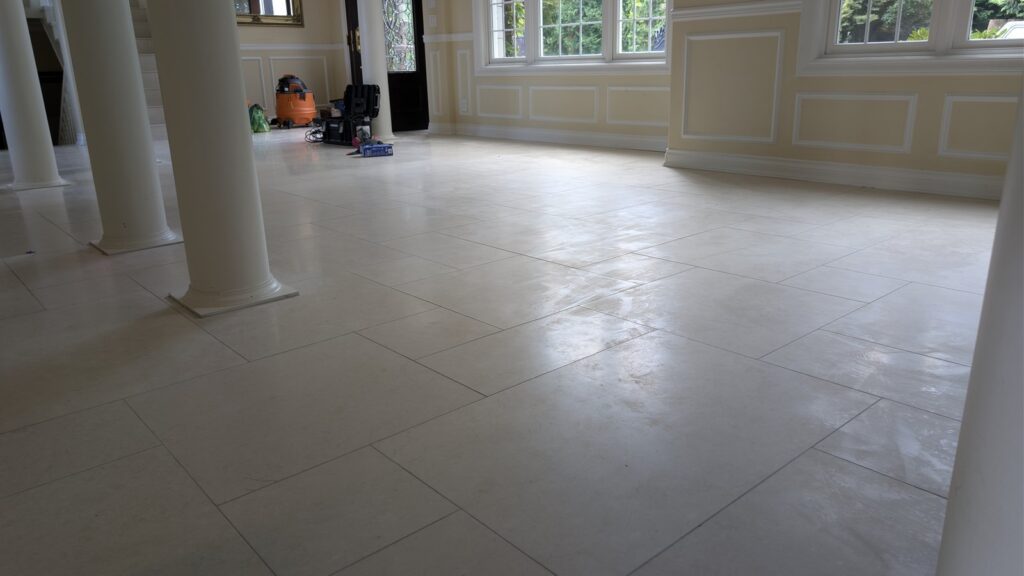
Nothing is quoted over the phone. Terrazzo that photographs badly is often in good shape, and the reverse happens too.
Dust free throughout. Water holds the dust down and what’s left is captured at the tool.
What moves the price:
Our pricing page has more on how jobs are priced.
On timing: it depends on the size of the floor and its condition. A small entry takes far less time than a large lobby, which is usually done in sections. Your quote has the real number.
Terrazzo floor gone dull, or cracking?
778-862-4998
Terrazzo is all over the older parts of the city: apartment entries and lobbies in the West End and especially around English Bay, heritage buildings downtown, and older homes. We work across Vancouver and the Lower Mainland.
In strata buildings and hotels we schedule around the building, overnight or in quiet hours, so the entry stays open. How we work in hotels and commercial buildings.
A strata lobby floor belongs to every owner, so the decision usually goes to a council meeting. The emailed quote sets out what’s being restored, the finish, and which areas close and when, so it can go straight to council. See our property management page.
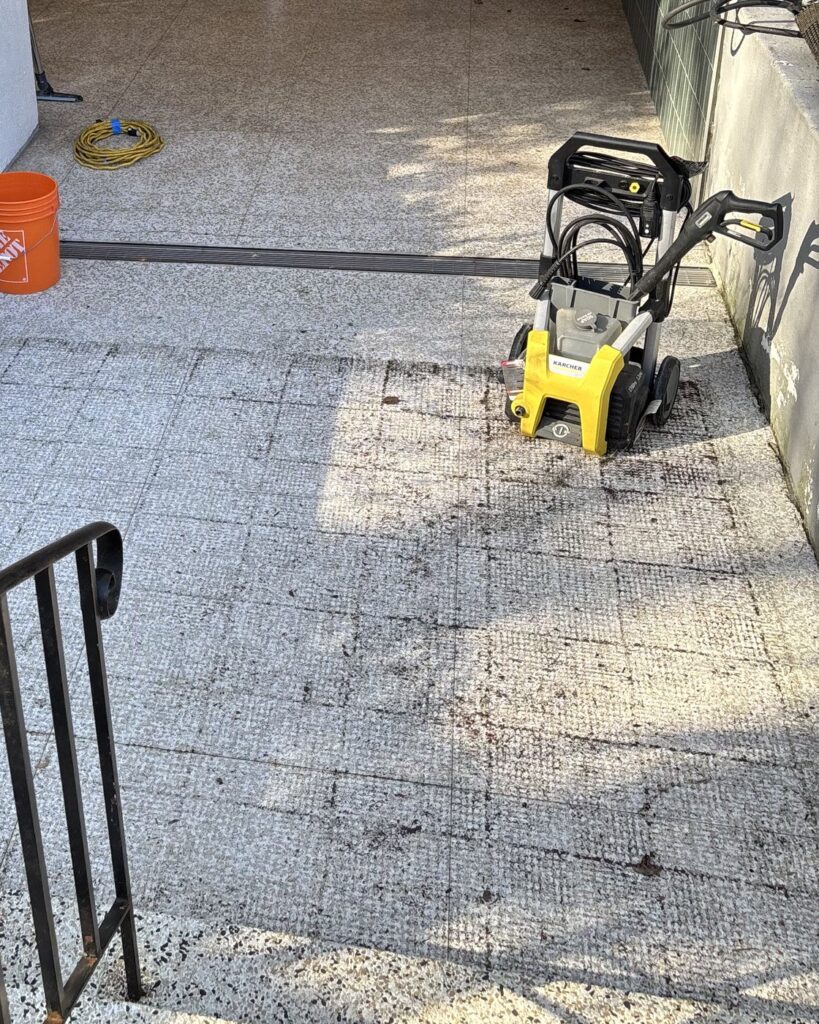
Before
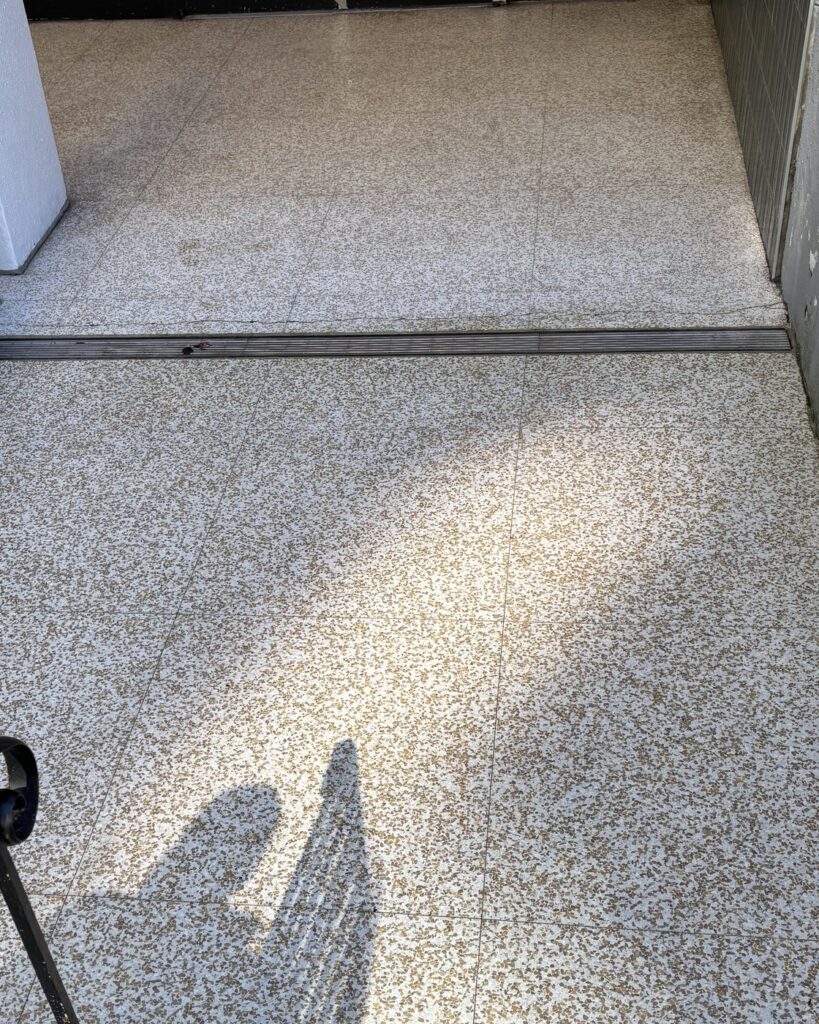
After
An apartment building entry near English Bay. Before: dull, with dirt ground into the surface and the joints. After: a deep hone, a clean, a matte finish and a sealer.
Yes, almost always. Terrazzo is built to be ground back and polished again, and the chips run through its full depth, so a floor that has gone dull, scratched or etched usually comes back to its original pattern. Cracks and chips get filled before the surface is refinished.
Sweep or dust-mop often, because grit does most of the damage. Wash with a pH-neutral cleaner made for stone and clean water. Skip vinegar, citrus cleaners, bleach and anything abrasive. Dish soap leaves a film that holds onto dirt, so it’s best kept for the dishes. Mats inside and outside the door catch a lot of grit through the wet months.
Grit underfoot, acids and the wrong cleaning products. Most terrazzo is made with marble chips, so acid etches it the same way it etches a marble counter. Heavy impacts can chip it, and movement in the building or the slab underneath can crack it.
If it still looks dull when it’s clean, the problem is the surface. Usually that’s wear from foot traffic, etching, or an old floor finish that has built up and yellowed. All three come back with honing and polishing.
Real terrazzo is cold and hard underfoot, and its chips are random. Porcelain tile and vinyl both come in convincing terrazzo prints: if the same chip pattern repeats from tile to tile it’s likely porcelain, and if the floor feels slightly soft or warm it may be vinyl. Neither porcelain nor vinyl is stone, so stone restoration doesn’t apply to them.
It helps on cement terrazzo; epoxy terrazzo we usually finish with a crystallizer instead. A penetrating sealer slows liquids soaking in, which gives you time to wipe a spill up. It doesn’t make the floor stain-proof, and it does nothing to stop etching, because etching is acid reacting with the stone itself.
Yes. The work is dust free, and in strata buildings and hotels it’s scheduled overnight or in quiet hours, often a section at a time, so people can still get in and out. The whole floor still gets done, so it ends up as one even surface.
Send a photo or call. We will look at it on site and tell you honestly whether it is worth doing.
Free estimate. No obligation.